Seasonal preparation is less about buying devices than verifying the ones already attached to comfort and security. Batteries, outdoor exposure, daylight schedules and heating setbacks all behave differently in cold weather.
Use published operating ranges and HVAC guidance for the exact equipment. A smart thermostat cannot correct an unsafe system, poor insulation or a closed vent, and a battery camera still needs enough energy and signal to report.
Best for
Homes with smart thermostats, outdoor sensors, locks or seasonal lighting routines.
Skip it if
Heating maintenance or weatherproofing problems need professional attention first.
Check batteries in their real environment
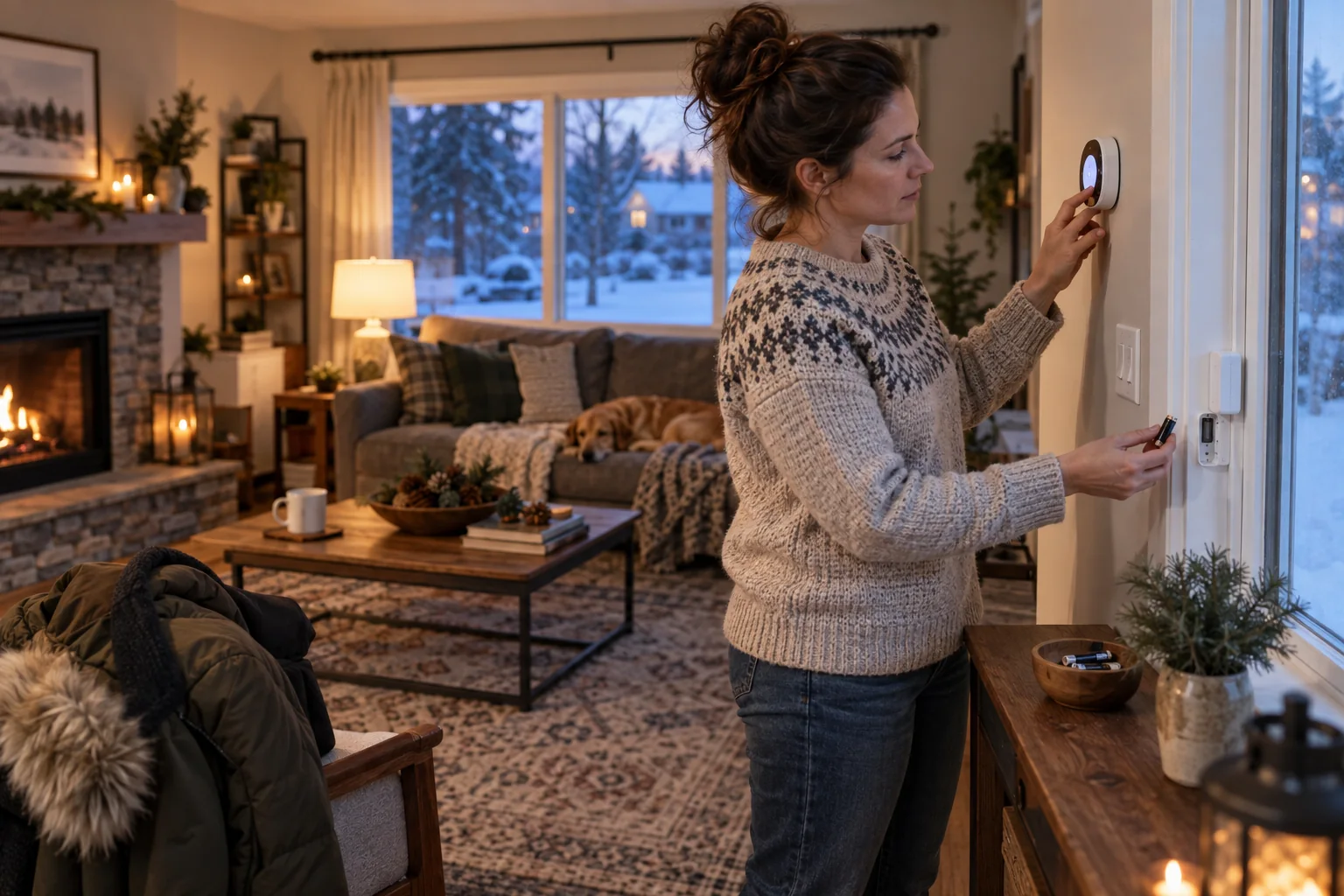
Replace weak batteries before outdoor temperatures fall and verify the device from its installed location. Cold can reduce available battery performance, while metal doors and wet masonry can complicate wireless links.
Keep spare batteries of the correct type in a known place, but do not mix ages or chemistries. Record the replacement date instead of relying on memory.
Tune comfort by room and routine
Compare thermostat readings with where people spend time. A warm hallway does not guarantee a comfortable nursery or home office. Remote sensing can inform decisions, but airflow, insulation and equipment balance remain building questions.
Avoid aggressive setbacks that cause long recovery periods or conflict with pets, plants or plumbing protection. Make small changes and observe a complete weather cycle.
Review darkness-driven automations
Sunset arrives earlier, so exterior and entry lights may run much longer. Use appropriate off times or occupancy conditions, and confirm that lights do not disturb neighbors or shine into bedrooms.
Update vacation and freeze-response contacts. If an alert arrives while you are away, someone local should know where the shutoffs, thermostat and spare key are.
Before you spend
- Test essential batteries before cold weather
- Verify outdoor device signal
- Review heating recovery time
- Update sunset-based schedules
- Confirm the local emergency contact