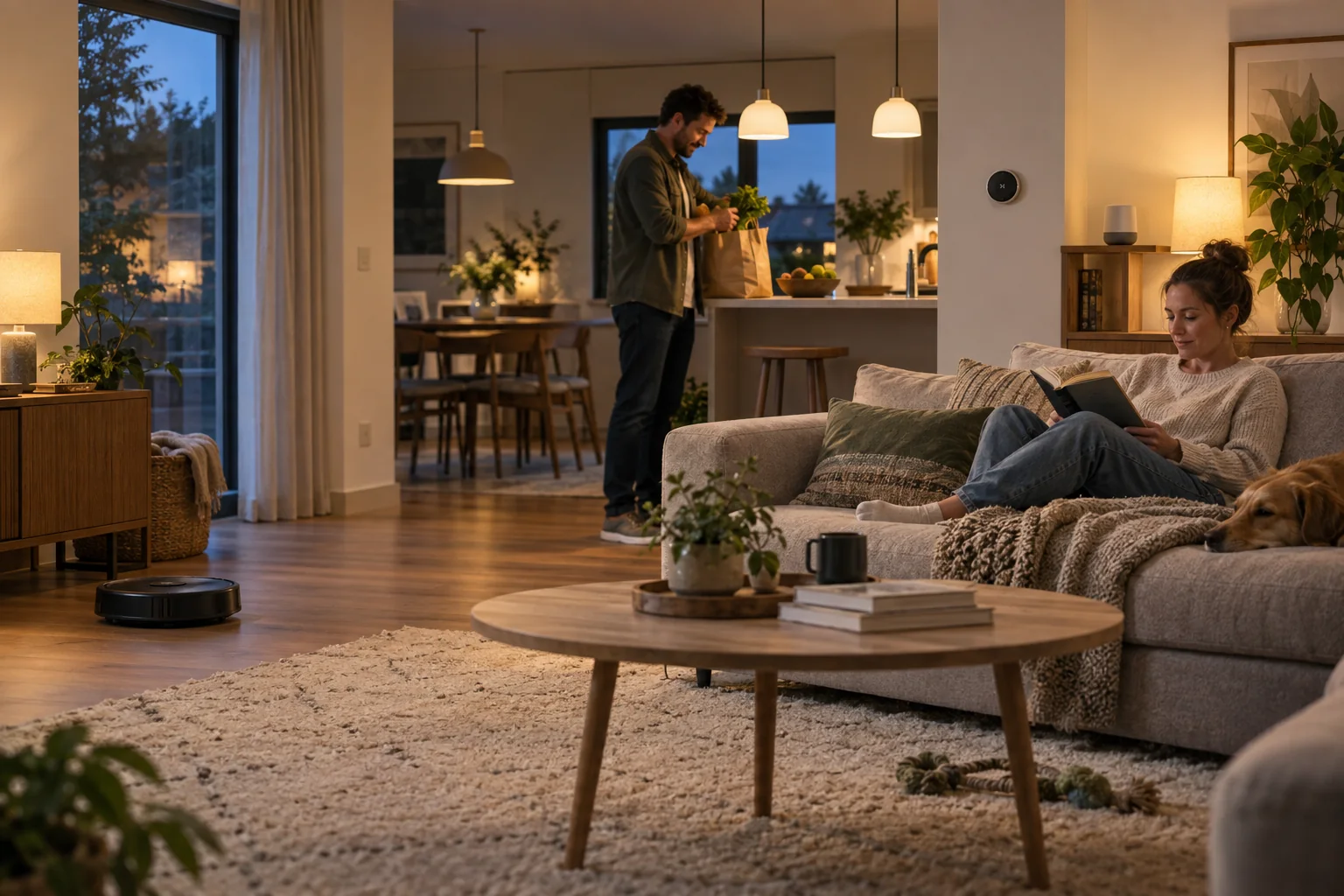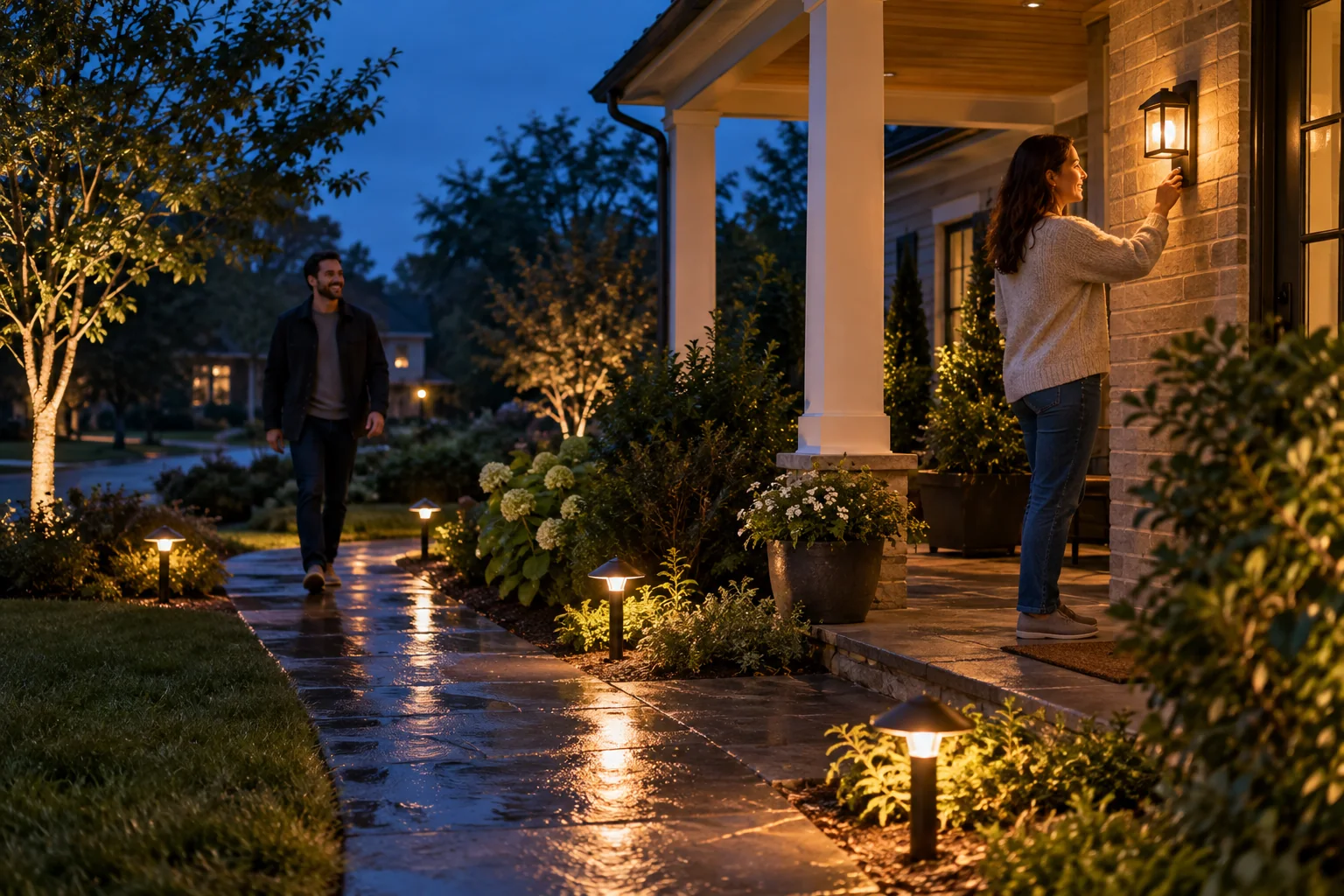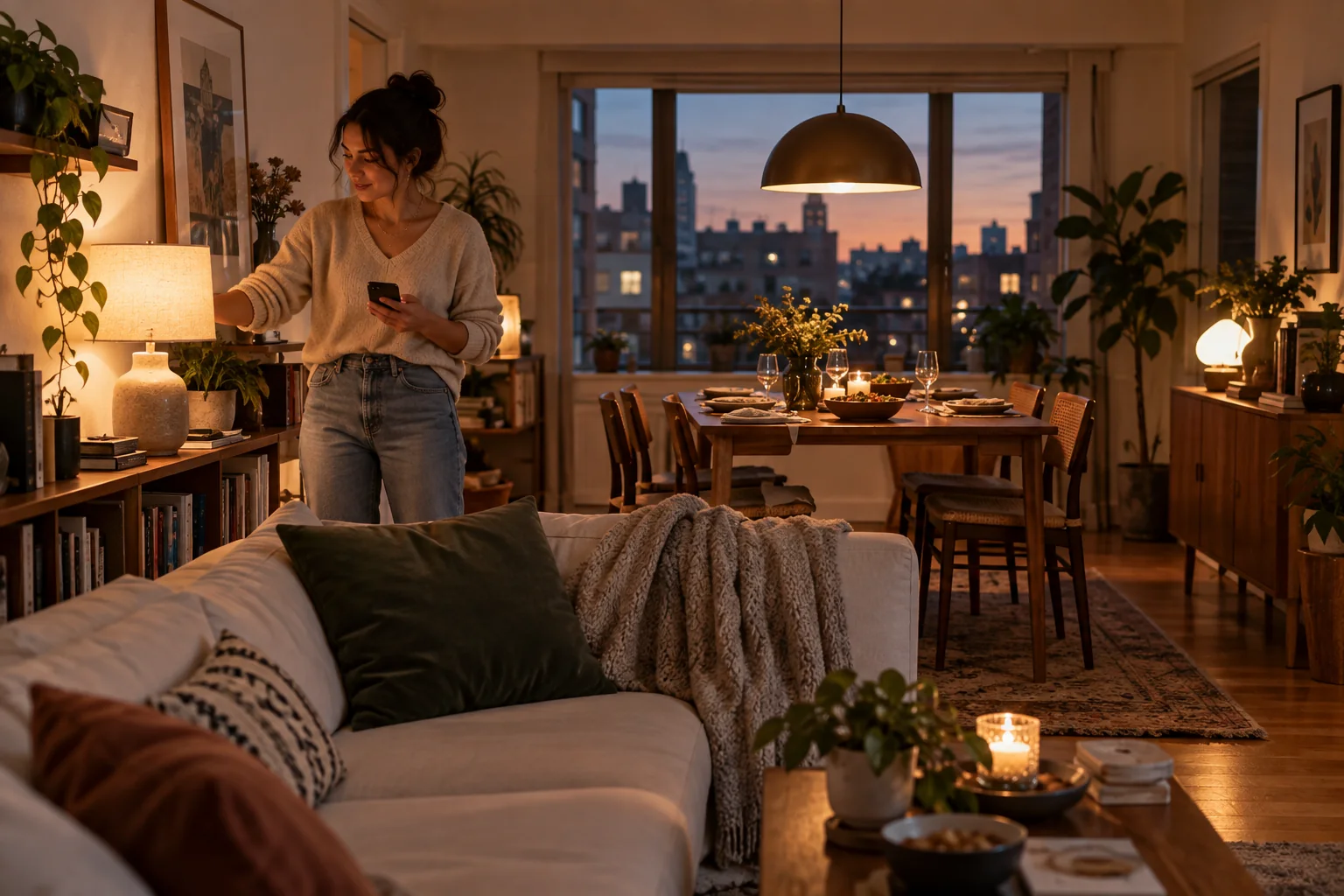
Good lighting begins with tasks and sightlines, not apps. A room needs enough light to move safely, focused light for reading or food preparation, and softer ambient light that makes the room comfortable after dark. Smart controls are useful when they move those layers together.
The buying decision is partly electrical. Smart bulbs are flexible for lamps and color; smart switches are often better for fixed fixtures and familiar control. A bridge-based system can also keep dozens of lights from competing directly on Wi-Fi.
Best for
Living rooms, kitchens and bedrooms where several light sources should change together.
Skip it if
The room has unresolved dimmer, bulb or neutral-wire compatibility questions.
Map the layers before buying controls
List every fixture and assign it a job: general, task or accent. If one bright ceiling fixture is doing all three, improve the lighting plan before automating it. A shaded table lamp beside the sofa may create more comfort than another connected ceiling bulb.
Choose two or three scenes with plain names such as Bright, Evening and Off. Scenes should be noticeably different and easy to explain. Tiny one-percent changes create clutter in the app and make physical scene buttons harder to use.
Choose bulbs or switches circuit by circuit
A smart bulb must remain powered to respond. It works well in lamps whose switch can be left on, but becomes frustrating when a guest cuts power at the wall. Smart switches preserve the usual habit and are efficient for multiple fixed bulbs, provided the wiring and load are compatible.
Use a qualified installer when in-wall work is outside your skill or local rules. Confirm neutral-wire, dimming and multi-way requirements for the exact model. LED compatibility matters: a dimmer and bulb can both work separately yet flicker when paired.
Automate gently
Schedules are predictable and often better than motion in rooms where people sit still. Motion works best in hallways, closets and utility areas with clear entry and exit behavior. In a living room, presence sensing or a physical scene button may avoid lights switching off while someone reads.
Set a manual override rule: if a person changes the light, the automation waits until the next time block. A home feels calmer when it respects a deliberate choice instead of immediately correcting it.
Before you spend
- Separate ambient, task and accent light
- Confirm bulb and dimmer compatibility
- Preserve wall control
- Create no more than three core scenes
- Test motion timing while sitting still