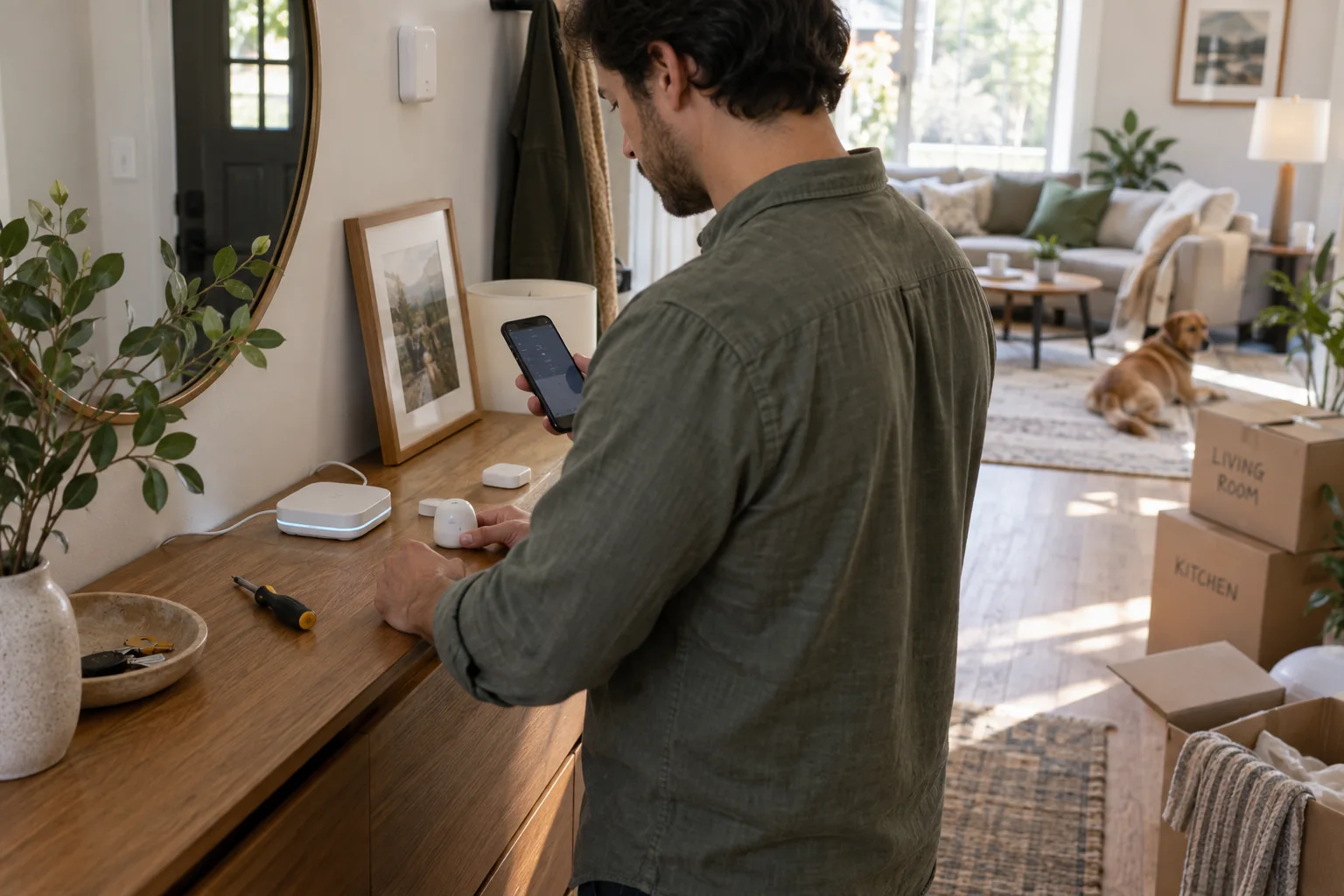
Smart-home shopping often begins with a device and ends with a search for something useful to make it do. Reverse that order. Write down the repeated moments that create friction—dark entrances, a cold first floor, forgotten lamps, pet hair after work—and choose the smallest reliable system that can remove one of them.
The aim is not maximum automation. It is fewer decisions. A physical switch should still work, guests should not need an app, and every routine should have an obvious fallback. That is what turns connected equipment into part of the home rather than a hobby that constantly asks for maintenance.
Best for
Households that want practical automation without turning every room into a dashboard.
Skip it if
You are not yet willing to standardize one primary home platform or document recovery steps.
Start with a moment, not a product category
Walk through one normal weekday from waking up to locking the door at night. The strongest candidates are transitions: entering a dark hallway with full hands, leaving appliances on during a rushed departure, or crossing a cold room before the heating schedule catches up. Rank each irritation by frequency and consequence. A daily two-minute annoyance deserves attention before an occasional novelty.
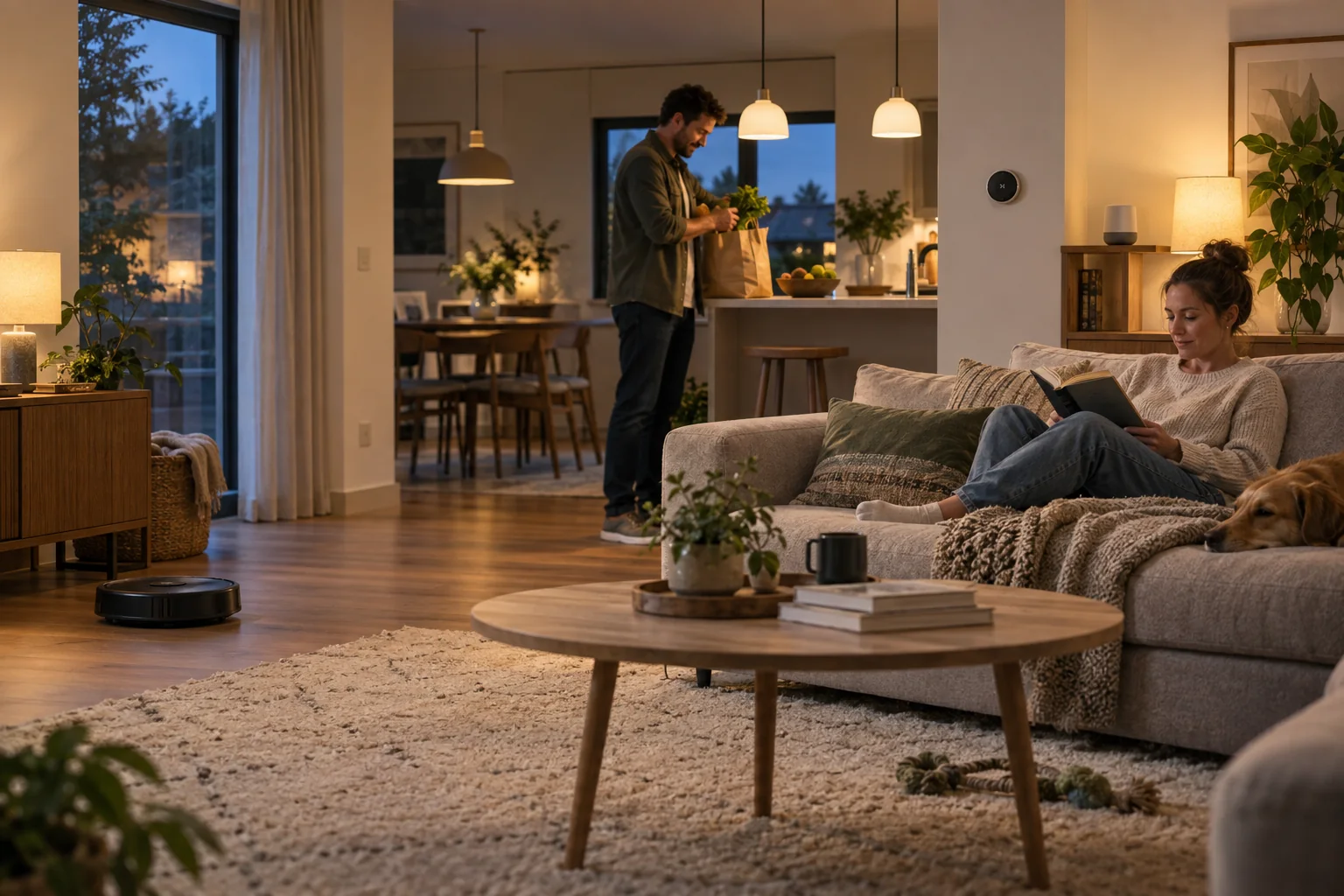
Build the first routine with no more than three actions. An “Arrive” routine might turn on the entry and kitchen lights, set a comfortable temperature and pause a robot vacuum. Keeping the chain short makes failures easy to identify and helps the household understand what should happen.
Choose controls people can see and trust
Voice control is convenient when your hands are full, but it should be an extra control rather than the only control. Wall switches, keypads and clearly labeled scene buttons age better than a phone-only setup. They also make the home usable for children, visitors and anyone whose phone is charging in another room.
For lighting, decide whether smart bulbs or smart switches suit the circuit. Bulbs make color and per-lamp control easy; switches preserve normal behavior and can be better for a bank of ceiling fixtures. Do not mix approaches casually in the same room—someone will eventually cut power to the smart bulb and wonder why the routine failed.
Budget for maintenance, not just hardware
Connected homes accumulate batteries, firmware updates, account permissions and wireless dependencies. Keep a short household note with hub location, device names and the reason each automation exists. Replace sensor batteries on a schedule and remove automations that no longer solve a real problem.
A calm system also limits notifications. Door-open alerts may matter when nobody is home, but the same alert can be noise during a busy Saturday. Use modes such as Home, Away and Night to change behavior rather than sending every event to every phone.
Before you spend
- Pick one primary ecosystem before buying
- Keep manual controls functional
- Name devices by room and function
- Limit the first routine to three actions
- Write down the recovery steps