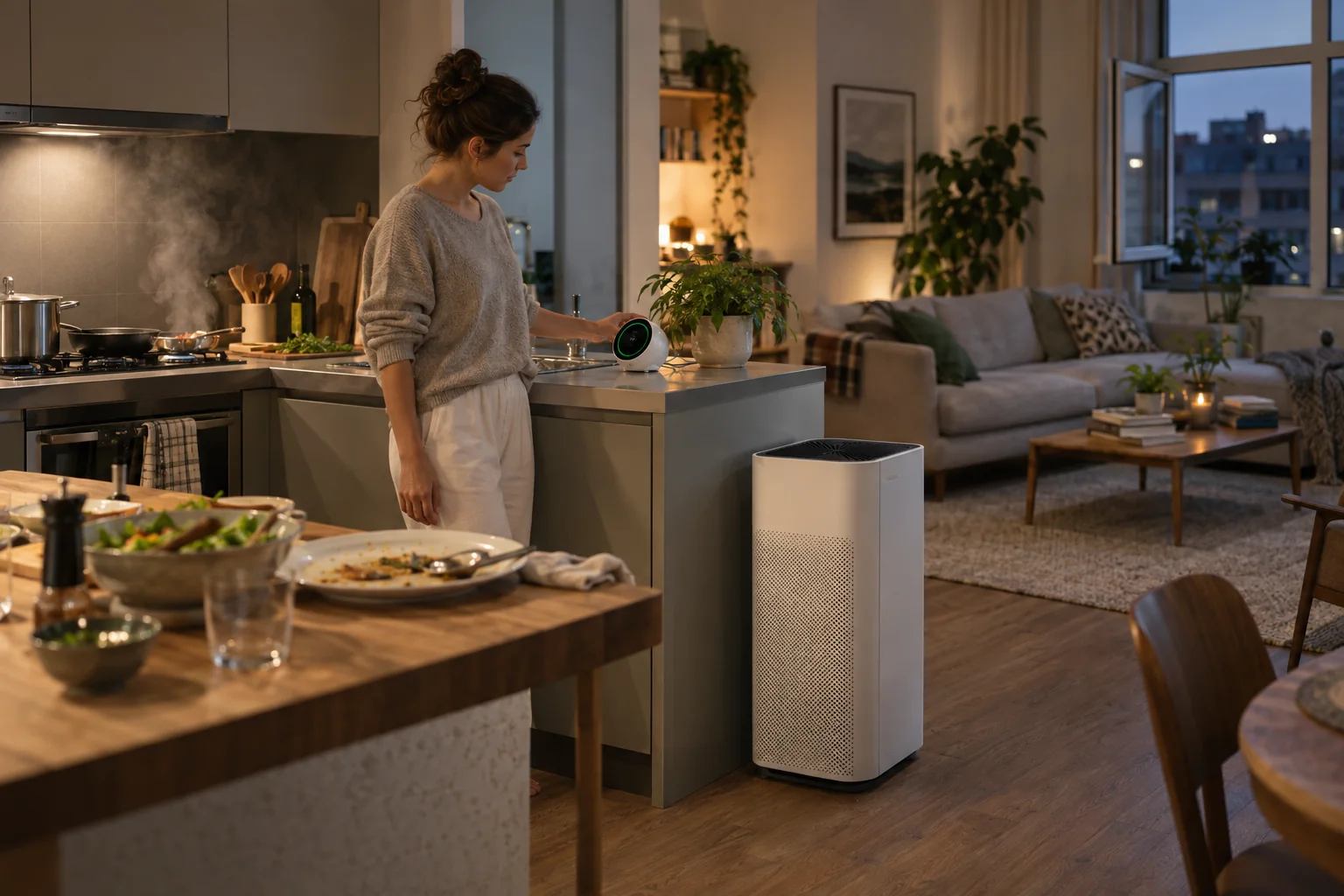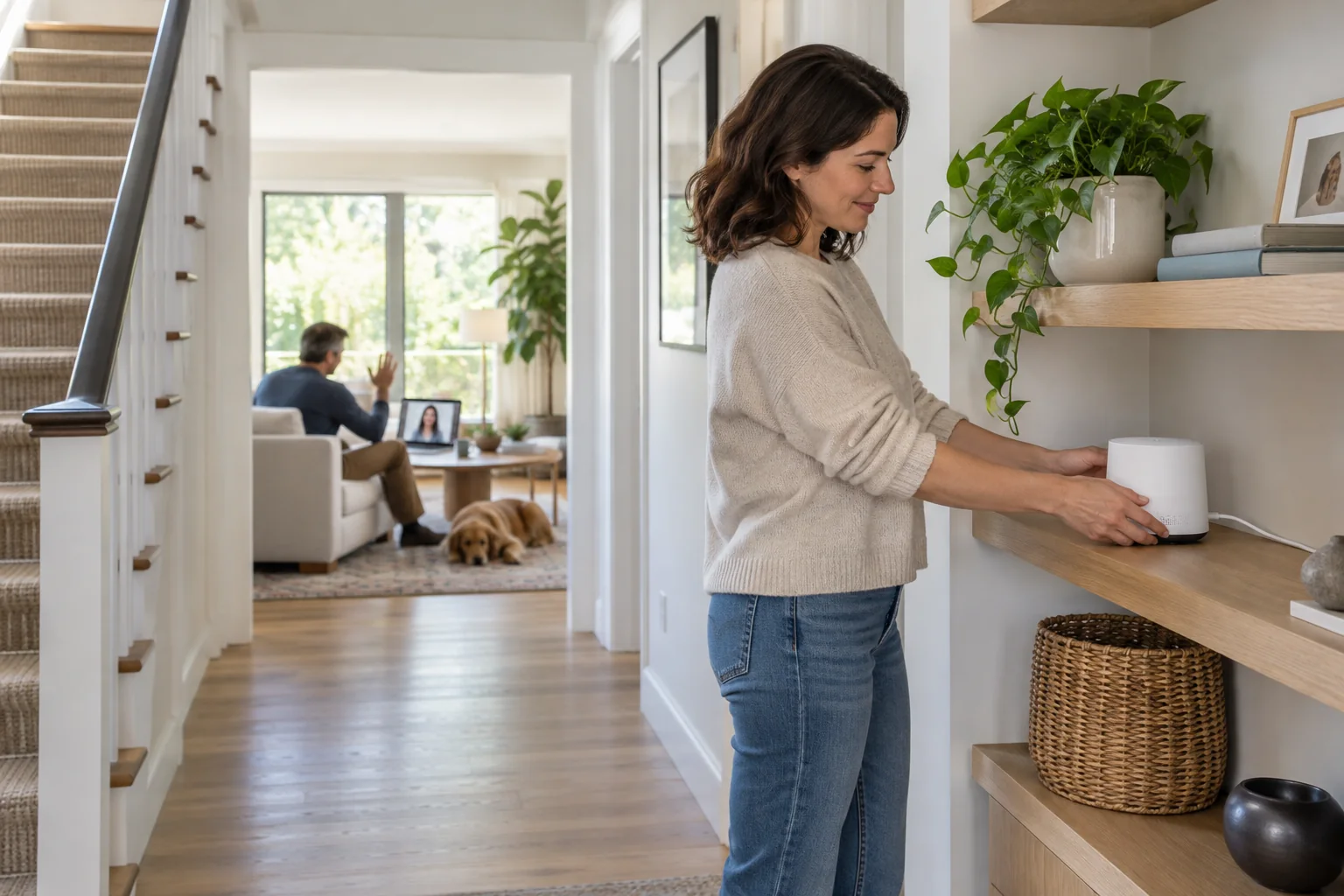
A smart speaker is three products sharing one enclosure: a music system, a voice interface and sometimes a smart-home hub. Decide which job matters in each room before comparing sound or assistant features.
The room also changes the product. Kitchens need easy cleanup and clear timers, bedrooms benefit from simple privacy controls, and living rooms demand better sound placement. Buying identical speakers everywhere is convenient, but not always sensible.
Best for
Households that use timers, multi-room audio, intercom or hands-free smart-home control.
Skip it if
The household is uncomfortable with room microphones or primarily listens through headphones.
Give each room one primary job
In a kitchen, intelligible voice pickup and timers may matter more than deep bass. In a living room, music quality, television integration and stereo expansion can justify a larger speaker. In a hallway, an intercom or chime function may be the only reason to add a device.
Write the job beside the room on a floor plan. If a room has no recurring hands-free task and no listening habit, leave it without a speaker. Fewer microphones and power cables are also a design choice.
Choose the household platform deliberately
Apple-first homes gain smooth handoff, Home control and intercom benefits from HomePod mini. Sonos offers broader playback inputs and a mature path from one room to multi-room audio. Other ecosystems may make more sense if their assistant and services already organize the household.
Check which music services, family accounts and voice profiles are supported today. Do not assume a service available by phone will behave identically by voice. If two adults use different platforms, test guest playback and basic controls before expanding.
Place for sound and privacy
Keep the speaker away from a noisy extractor hood and hard corners that make voice pickup or bass uneven. A shelf with air around it usually sounds more natural than a closed cabinet. Use the maker’s room-tuning feature where offered, then listen at normal volume.
Learn the physical microphone control and make it easy to reach. Review voice history and personal-request settings, especially in guest rooms and shared areas. A useful setup makes privacy state visible rather than burying it in an app.
Before you spend
- Assign one job per room
- Check music-service support
- Test guest playback
- Keep microphone controls reachable
- Avoid enclosed shelf placement