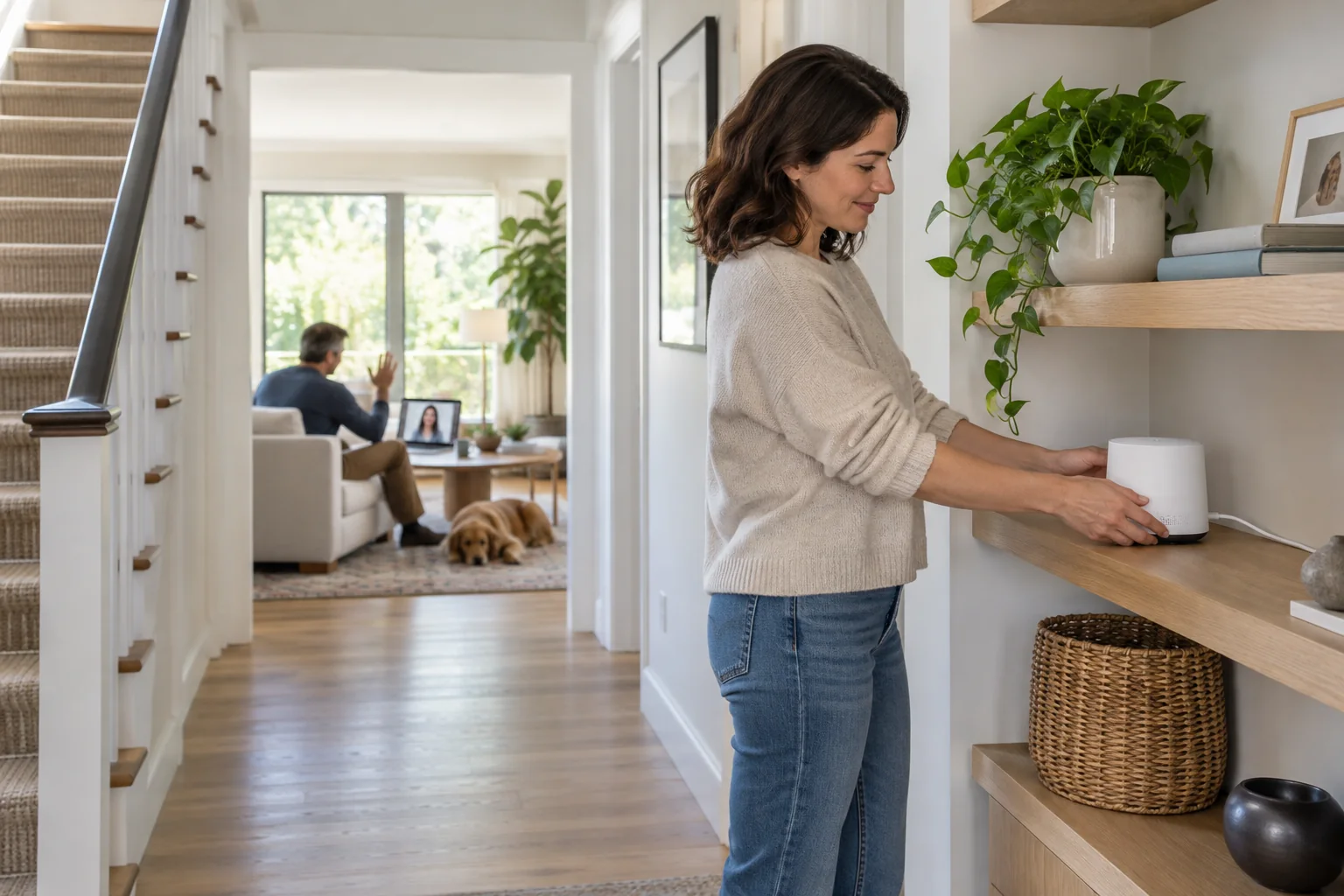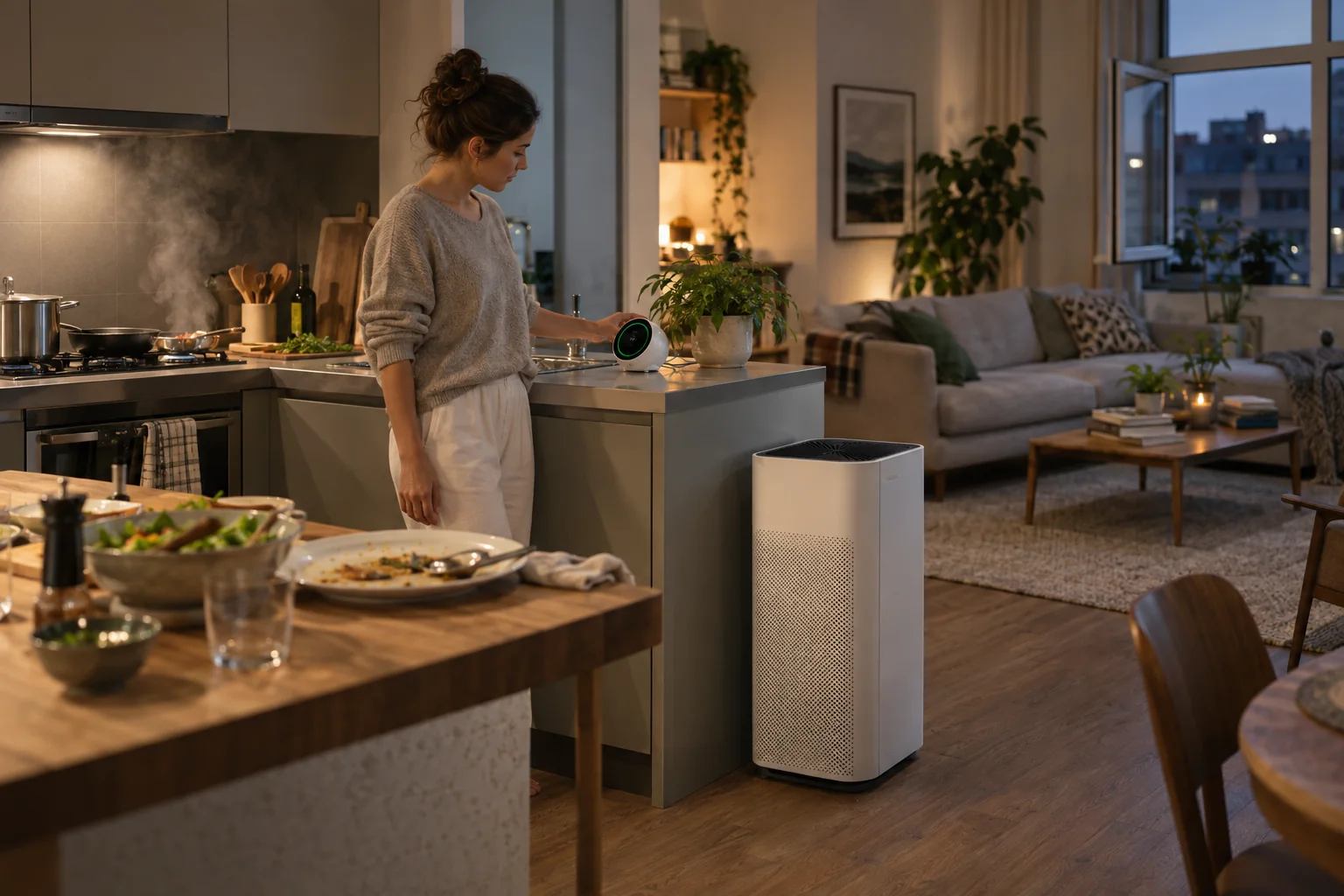
A monitor tells you what changes and when. A purifier moves air through filters. Neither automatically addresses every pollutant, moisture problem or ventilation need. Start by identifying the pattern—cooking particles, outdoor smoke, bedroom stuffiness or odor—then choose the response.
Consumer sensors are best used for trends rather than medical conclusions. Place them away from windows, vents and direct cooking plumes unless you are deliberately testing that source. Compare days and activities rather than reacting to every minute.
Best for
Households dealing with cooking particles, seasonal smoke, pollen or uncertain ventilation patterns.
Skip it if
You expect a purifier to solve combustion safety, mold causes or every gaseous pollutant.
Separate particles, gases and ventilation
Particulate readings can rise during frying, candles, smoke events and cleaning. A suitable particle filter can help reduce airborne particles when sized and operated correctly. Carbon dioxide trends are more directly a ventilation signal in occupied rooms; a particle filter does not remove it.
Volatile-organic-compound sensors can be broad and sensitive to cleaning products, alcohol and humidity. Use changes as prompts to investigate sources, not as precise identification of a specific chemical. Follow official public-health guidance for combustion alarms and hazardous conditions.
Size by clean-air delivery and real placement
A purifier needs to circulate the room repeatedly. Compare the maker’s room assumptions and independent clean-air metrics where available. Oversized claims may depend on a low number of air changes per hour; a smaller bedroom and an open great room are different jobs.
Place the machine where intake and outlet are unobstructed. A quiet mode that people will run every night may outperform a louder high setting that remains off. Check replacement-filter price and expected interval under your conditions.
Build a response plan before alerts
Decide what the household will do when a pattern appears: use the range hood while cooking, open cross-ventilation when outdoor conditions are suitable, run filtration before bedtime, or investigate a persistent source. Without a response, a monitor becomes an anxiety display.
Review outdoor air quality before opening windows during smoke or pollution events. Keep claims in proportion: home devices support comfort and exposure reduction, but they are not substitutes for professional assessment where health symptoms or building damage are involved.
Before you spend
- Identify the pollutant or pattern
- Place sensors away from direct sources
- Compare room-size assumptions
- Check filter cost and noise
- Write a response for each alert