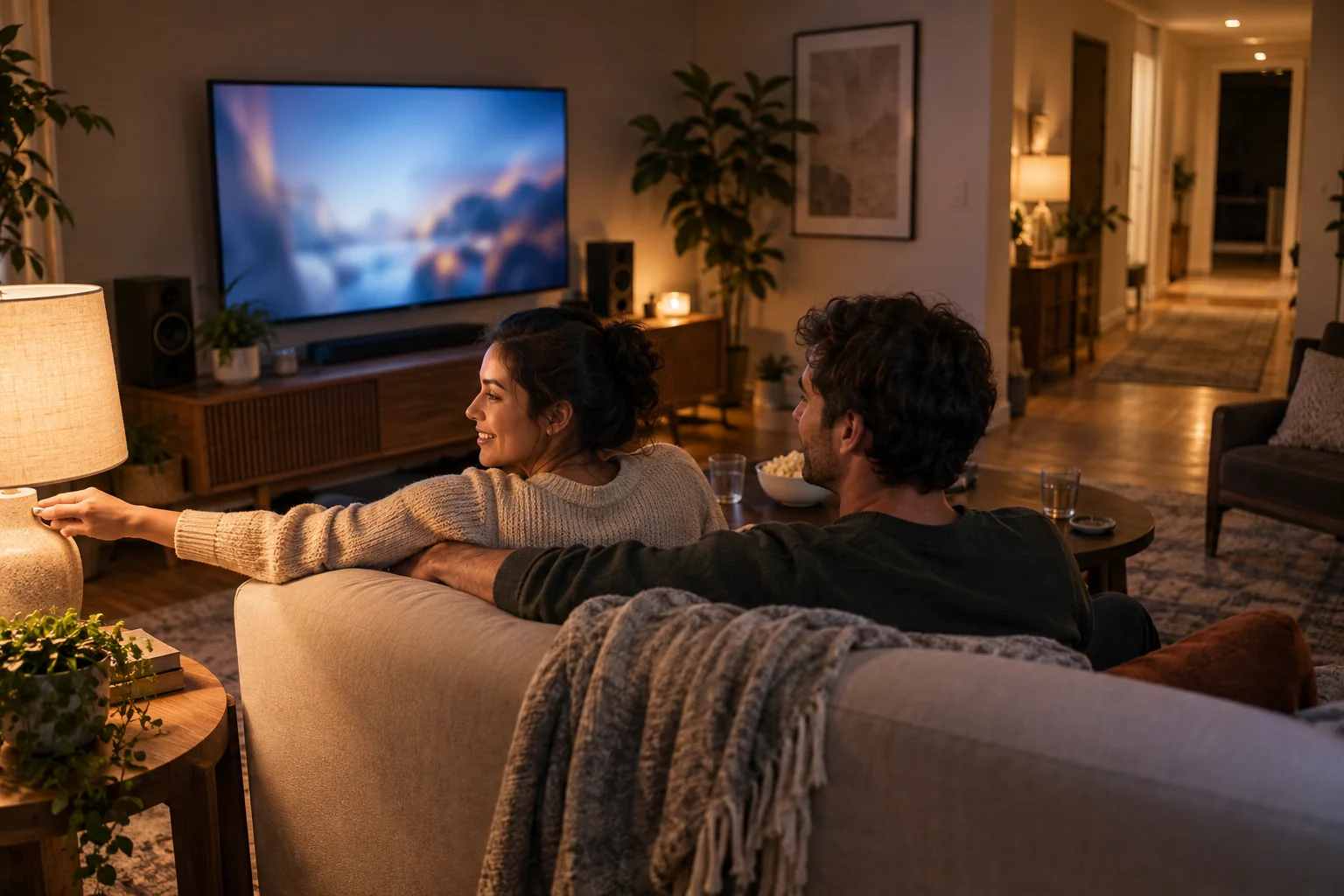
Streaming comfort is mostly environmental: controlled glare, moderate background light, intelligible sound and controls that work for more than one person.
Automations should set a starting state, not trap the household in it. Physical light and volume control still matter when someone arrives late, a child wakes or the app disconnects.
Best for
Living rooms shared by viewers with different hearing, lighting and control preferences.
Skip it if
The planned automation removes accessible controls or makes the room unsafe to walk through.
Shape the light in layers
Move bright sources out of the screen reflection and use dim, indirect light behind or beside the viewing area. Preserve step, doorway and hallway visibility rather than turning every fixture off.
A single scene can set a dependable baseline, but keep a nearby switch or remote for adjustment. Different programs and viewers need different brightness.
Solve dialogue before adding volume
Place speakers according to their guidance and check that furniture is not blocking them. Explore supported dialogue or night modes before simply raising the entire soundtrack.
For late viewing, lower bass and overall level to respect sleepers and neighbors. Personal listening may be the cleaner solution in a shared home.
Reduce control ambiguity
Choose one normal path for power, input and volume, then label or store backup remotes consistently. Test what happens after a power interruption or device update.
Avoid a routine that switches every connected room. Movie night should not darken a home office or interrupt audio elsewhere without warning.
Before you spend
- Remove screen reflections
- Keep the walking path visible
- Test dialogue settings
- Choose one normal control path
- Limit the scene to relevant rooms