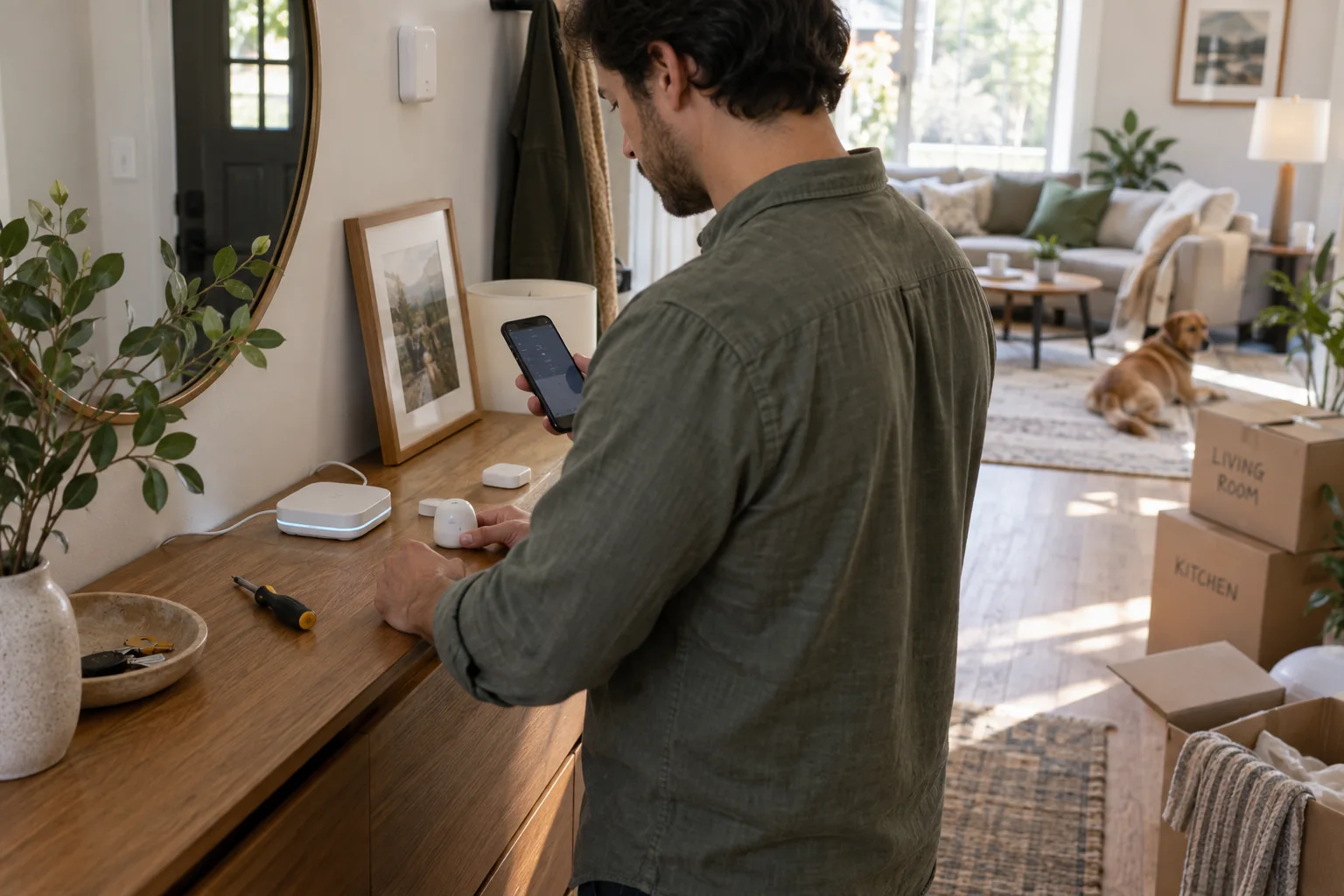
Connected homes need ordinary maintenance: clean sensors, healthy batteries, current users, tested alerts and automations that still match daily life. A short calendar makes those responsibilities visible.
Do not use an app status as proof that a safety device or physical system is working. Follow manufacturer tests and building or safety requirements for alarms, locks and electrical equipment.
Best for
Homes with several connected rooms, shared access or automations tied to security, leaks and comfort.
Skip it if
The system has no inventory or responsible owner; document it before adding more devices.
Do the ten-minute monthly round
Open the device list, look for offline equipment and verify that alerts reach the intended person. Walk through key routines instead of trusting the last activity timestamp.
Inspect visible batteries, mounts, cords and sensors for movement, dirt or damage. Replace consumables using the product guidance and record the date.
Use seasons as the deeper audit
At daylight-saving or heating-season changes, review schedules, thermostat behavior, exterior camera views and window-related routines. Sun angle and household timing shift even when the software does not.
Update firmware through the official app after reviewing release information and backup needs. Avoid changing every critical device immediately before travel or a major event.
Retire access and dead routines
Remove former residents, expired guests and obsolete integrations. Change shared credentials when appropriate and confirm that multi-factor authentication and recovery contacts are current.
Delete routines that nobody understands or that generate ignored alerts. A smaller, documented system is easier to trust than a long automation list with no owner.
Before you spend
- Keep a device and routine inventory
- Test important alerts monthly
- Inspect mounts, power and batteries
- Review users and recovery access
- Remove obsolete automations