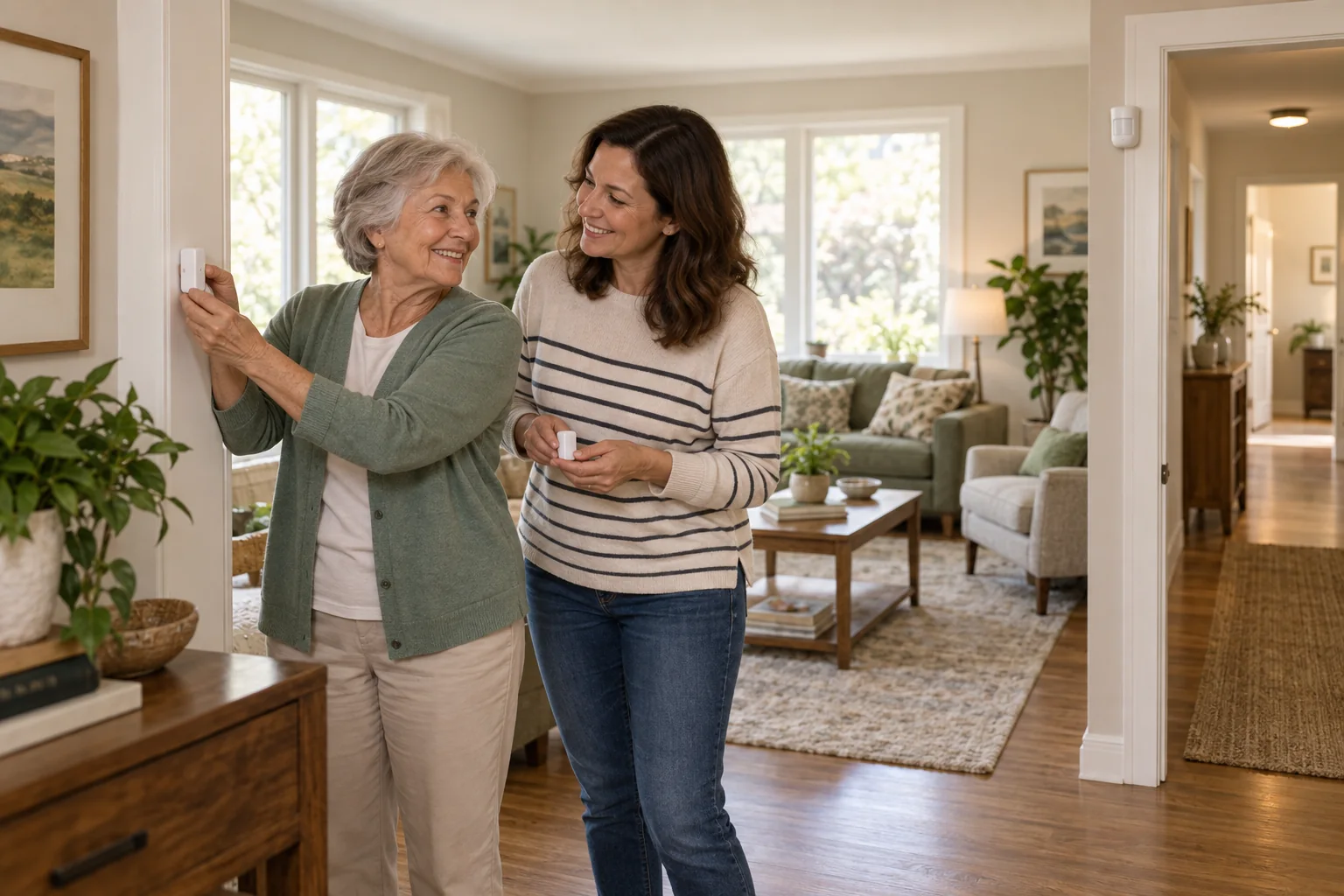
Technology should extend control for the person who lives in the home. Begin with their goals, comfort and consent. Automatic path lighting, easier door access and clear voice or button controls often provide value without collecting intimate data.
No consumer system replaces emergency services, clinical care or human contact. Treat sensors and notifications as supportive context, with explicit limits and a plan for false alarms.
Best for
Families planning gradual support with the full participation of the person living at home.
Skip it if
The resident has not consented or the system is being treated as medical monitoring it cannot provide.
Start with the resident’s difficult moments
Walk the home together in the morning, evening and at night. Ask which lights, doors, controls or reminders feel difficult. A motion-activated low hallway light may solve more than a complex dashboard viewed by someone else.
Choose controls with clear physical operation and consistent language. A labeled button beside the bed can be more dependable than a voice phrase that must be remembered exactly. Test it with hearing, vision and dexterity needs in mind.
Define consent and notification boundaries
Write down what each sensor detects, who receives alerts and what they will do. Door and motion patterns can reveal private routines even without a camera. The resident should be able to pause the system and know when it is active.
Avoid continuous family alerts. A missed routine may have harmless causes, and too many notifications lead to alarm fatigue. Use a calm escalation plan: call first, contact a nearby trusted person second, and use emergency channels only when appropriate.
Design for outages and changing needs
Essential lights and locks need manual operation. Keep printed instructions, spare batteries and a trusted local contact. Test the setup after router updates and power failures rather than discovering a dependency during a stressful moment.
Revisit the plan every few months. Needs, consent and comfort can change. Remove devices that no longer help, and involve occupational, medical or accessibility professionals where the question goes beyond convenience technology.
Before you spend
- Ask the resident to name the goal
- Prefer physical controls
- Document who receives which alert
- Keep manual fallbacks
- Review consent and usefulness regularly