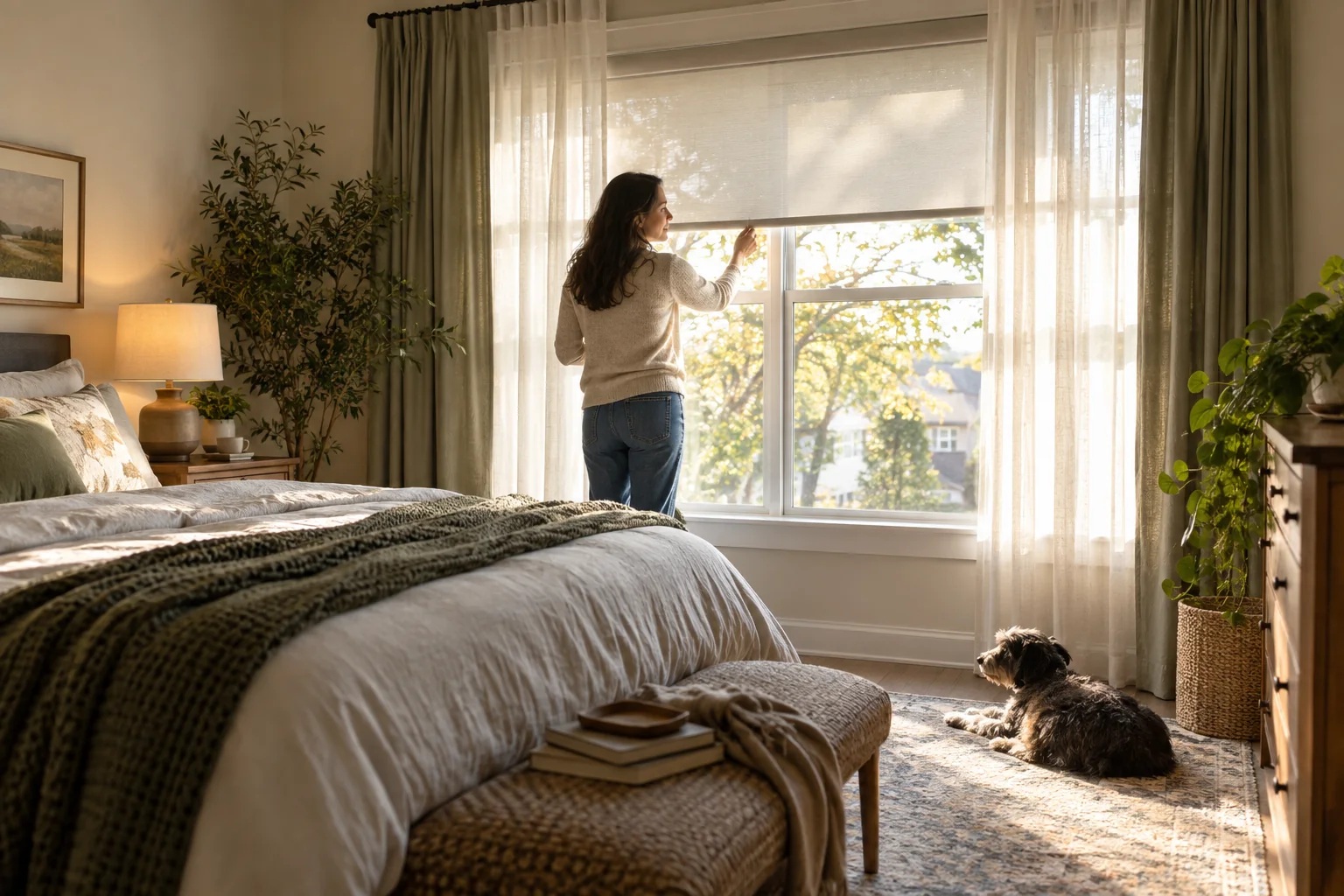
Motorized window coverings are still window coverings first. Opacity, privacy, mounting depth, stack height and a clean fit determine whether the room works; automation only moves the fabric.
Decide whether you need privacy, darkness, glare control or solar-heat reduction. One fabric rarely maximizes all four. Samples viewed on the actual window are more informative than app screenshots.
Best for
Hard-to-reach windows, regular glare problems and rooms that benefit from predictable daylight control.
Skip it if
Measurements, mounting permissions or a safe charging route are unresolved.
Measure the physical problem
Check the recess depth, trim, handles and anything that may block travel. Measure width in several places because older openings are not always square. For blackout, consider side gaps and light around the top, not only fabric opacity.
An inside mount looks integrated but needs enough depth and exposes more edge light. An outside mount can cover gaps and make a small window appear larger, but it changes the wall visually and may require permission.
Choose power before automation
Battery motors simplify retrofit work but create a charging job. Estimate how often the shade will move and whether the charging port remains reachable when furniture is in place. Hardwired power is clean for new construction but adds planning and installation cost.
Keep a wall button, remote or manual recovery method that guests can understand. Voice control is useful from bed, but it should not be the only way to regain privacy when the network is unavailable.
Schedule daylight, not novelty
Start with two events: open after waking and close before the room overheats or privacy changes. Sunrise-based schedules can follow seasons, but test them through a week before adding occupancy rules.
Coordinate lighting only where it removes a real transition. Closing a west-facing shade may bring on a reading lamp, while morning opening should not also turn on lights when daylight is already sufficient.
Before you spend
- Name the primary window problem
- Measure width, depth and obstructions
- Review fabric samples in the room
- Plan charging or wiring access
- Keep a visible non-phone control