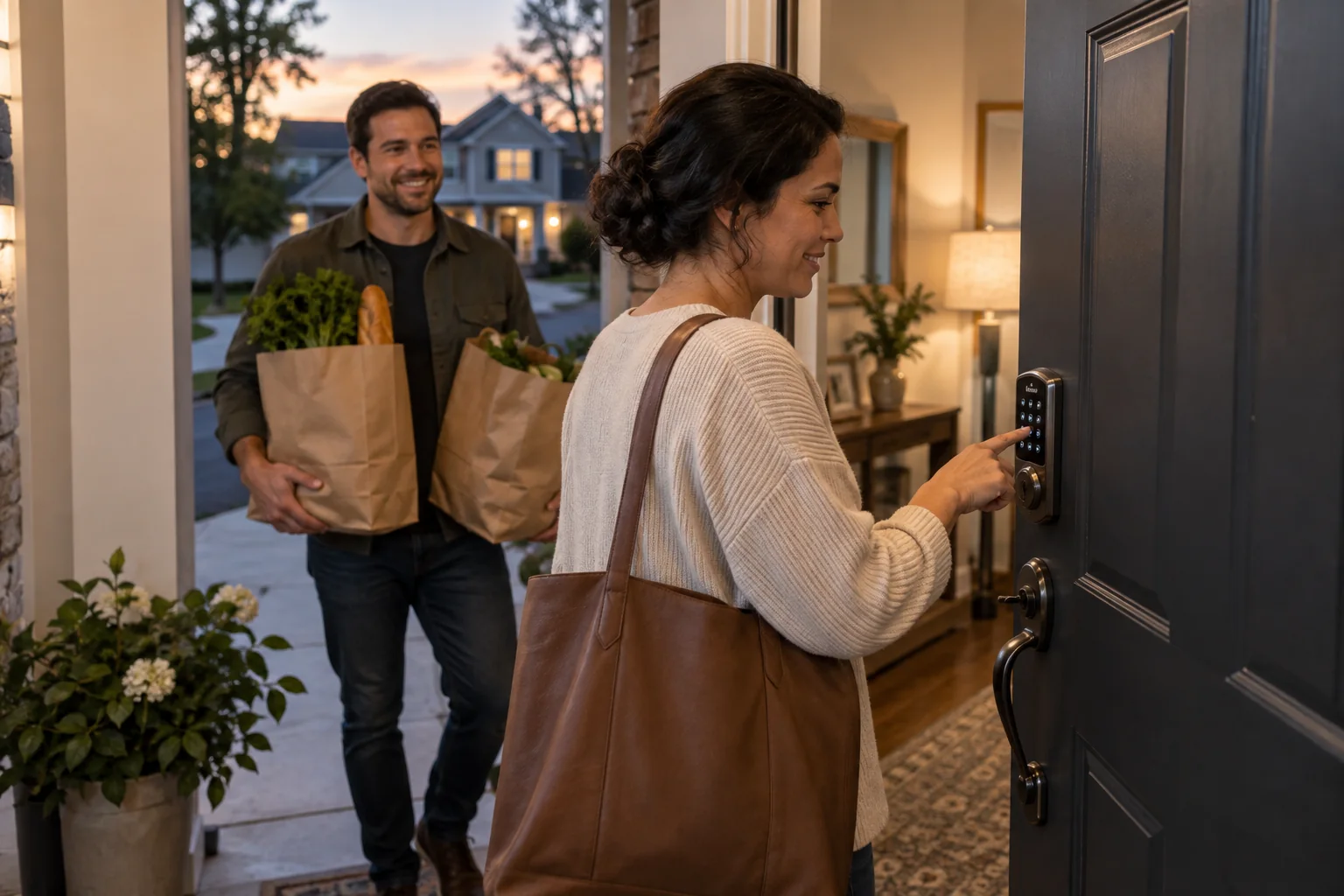
Smart locks are most useful when access is organized around people and time. Each regular user should have an identifiable method, while guests and service visits receive access that expires.
Compatibility, door alignment and emergency operation come before app features. A motorized lock cannot compensate for a door that must be pushed hard to latch.
Best for
Households coordinating children, relatives, visitors or recurring service appointments.
Skip it if
The door is misaligned, the property rules prohibit replacement or the household cannot maintain a reliable backup method.
Make the door easy first
Close and lock the door repeatedly in different weather. If the bolt rubs or requires pressure, correct the fit through an appropriate professional or property manager before adding a motor.
Confirm thickness, backset, handing and required exterior clearances against the lock documentation. Keep the original approved hardware when restoration may be required.
Give access a name and an end
Assign separate codes or credentials to regular users instead of sharing one family secret. Temporary visitors should receive a code limited to the needed dates or schedule.
Delete access immediately when a visit, tenancy or service relationship ends. Review the user list monthly so forgotten codes do not accumulate.
Practice failure calmly
Know how low-battery alerts appear, where the mechanical key is stored and how the lock behaves during a network or platform outage. Test backup operation from outside with another authorized person available.
Avoid hiding the only backup key beside the door. A trusted contact or secure, appropriate key arrangement is usually more resilient.
Before you spend
- Fix door alignment first
- Verify physical compatibility
- Create named credentials
- Set expiration for visitors
- Practice battery and key backup