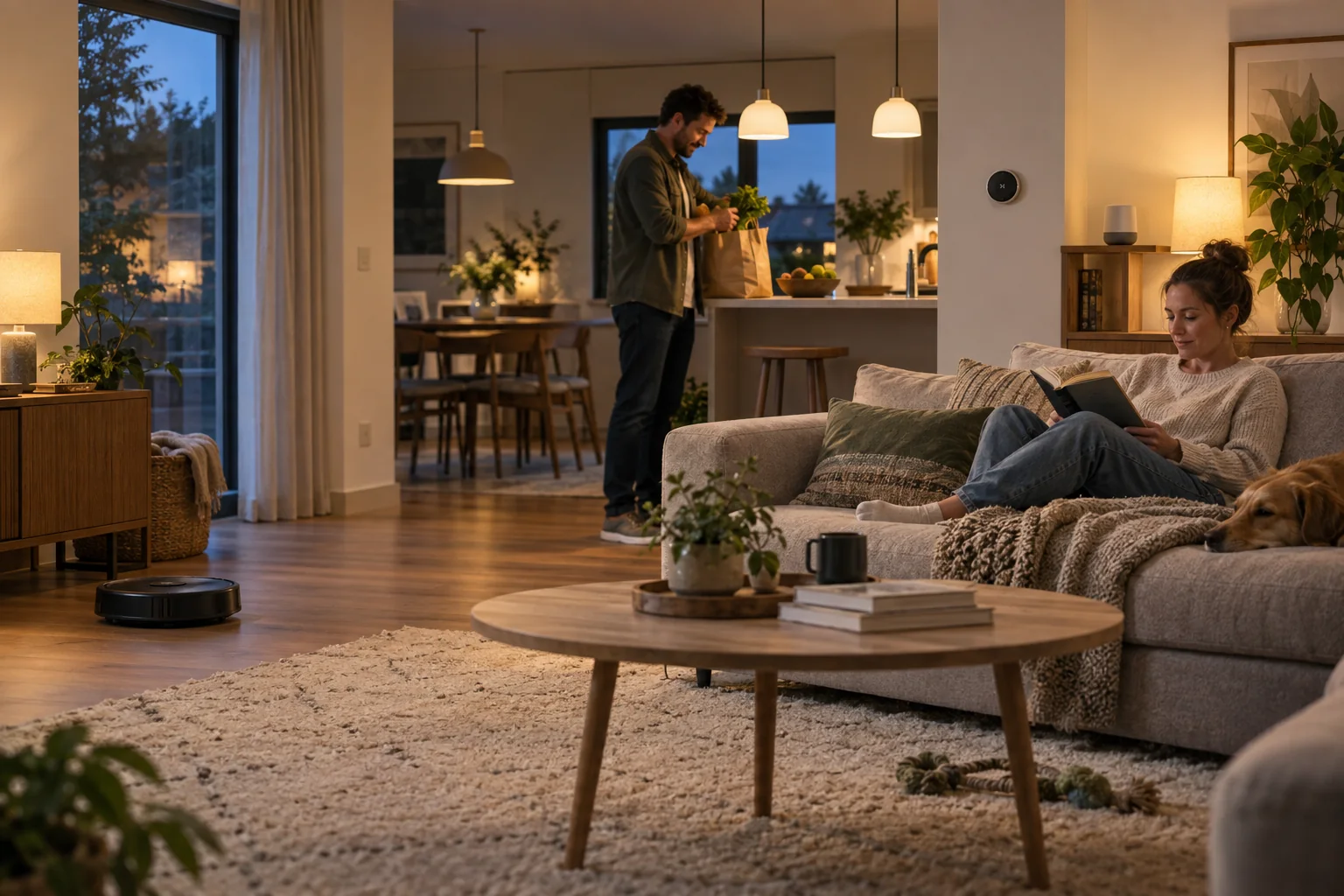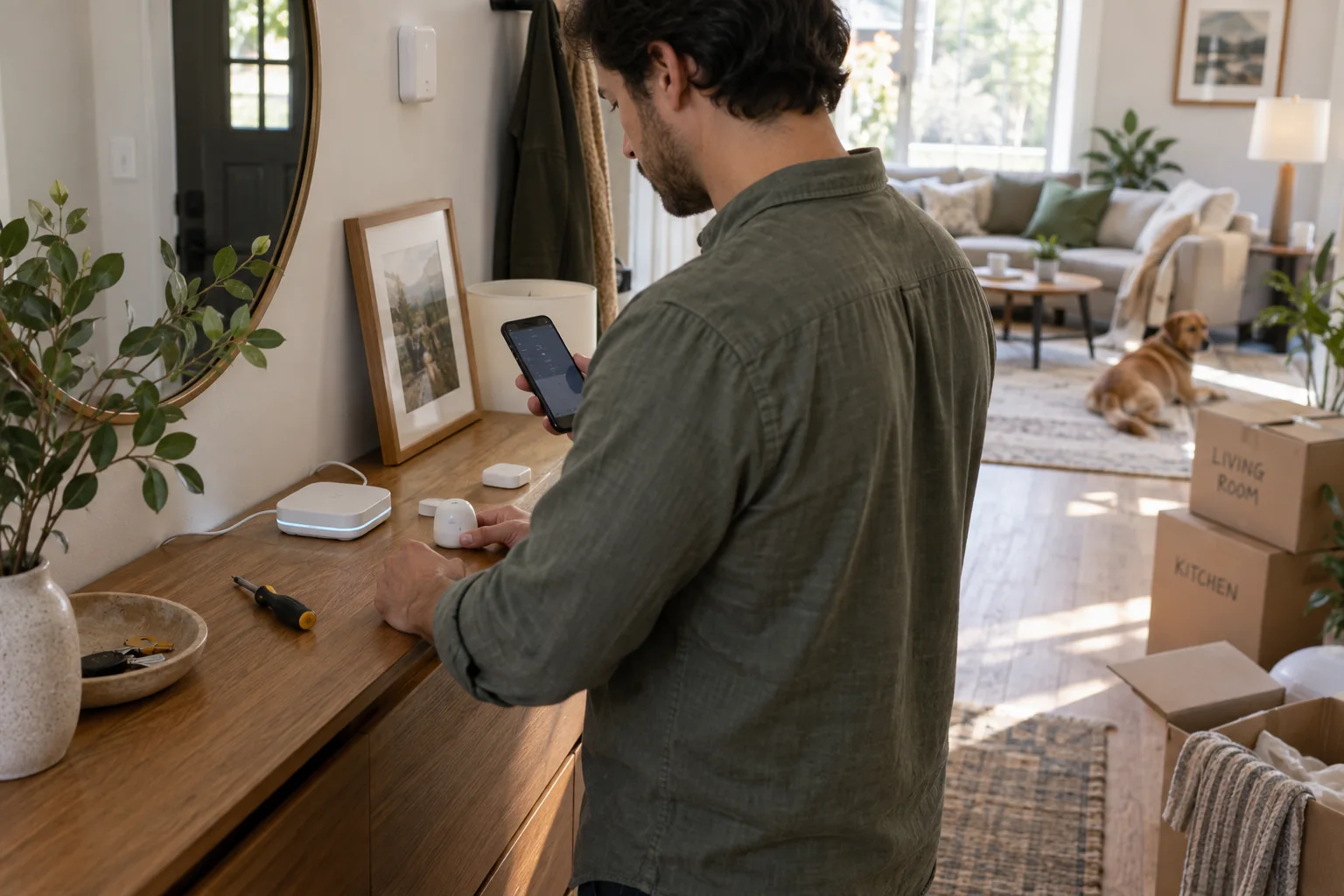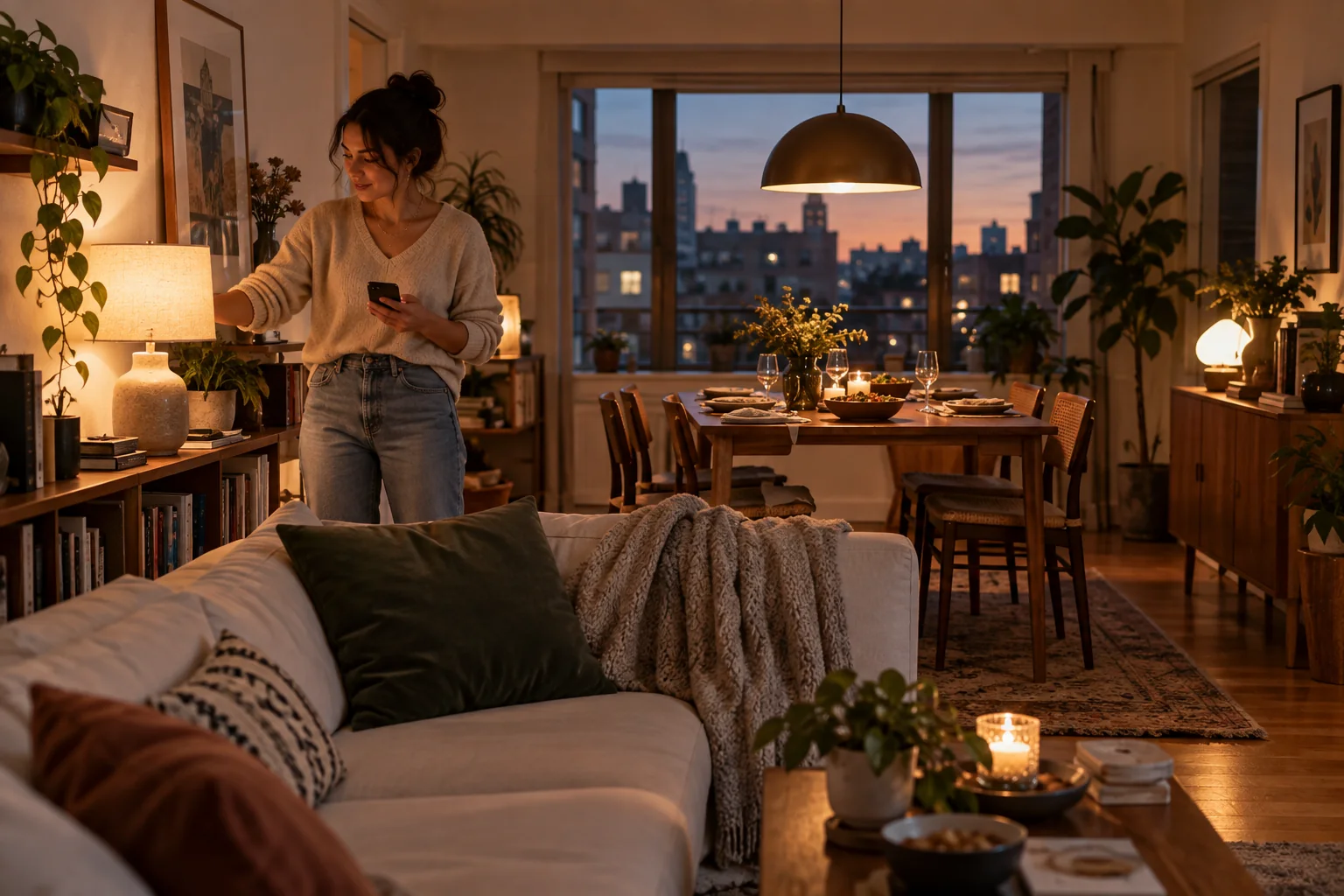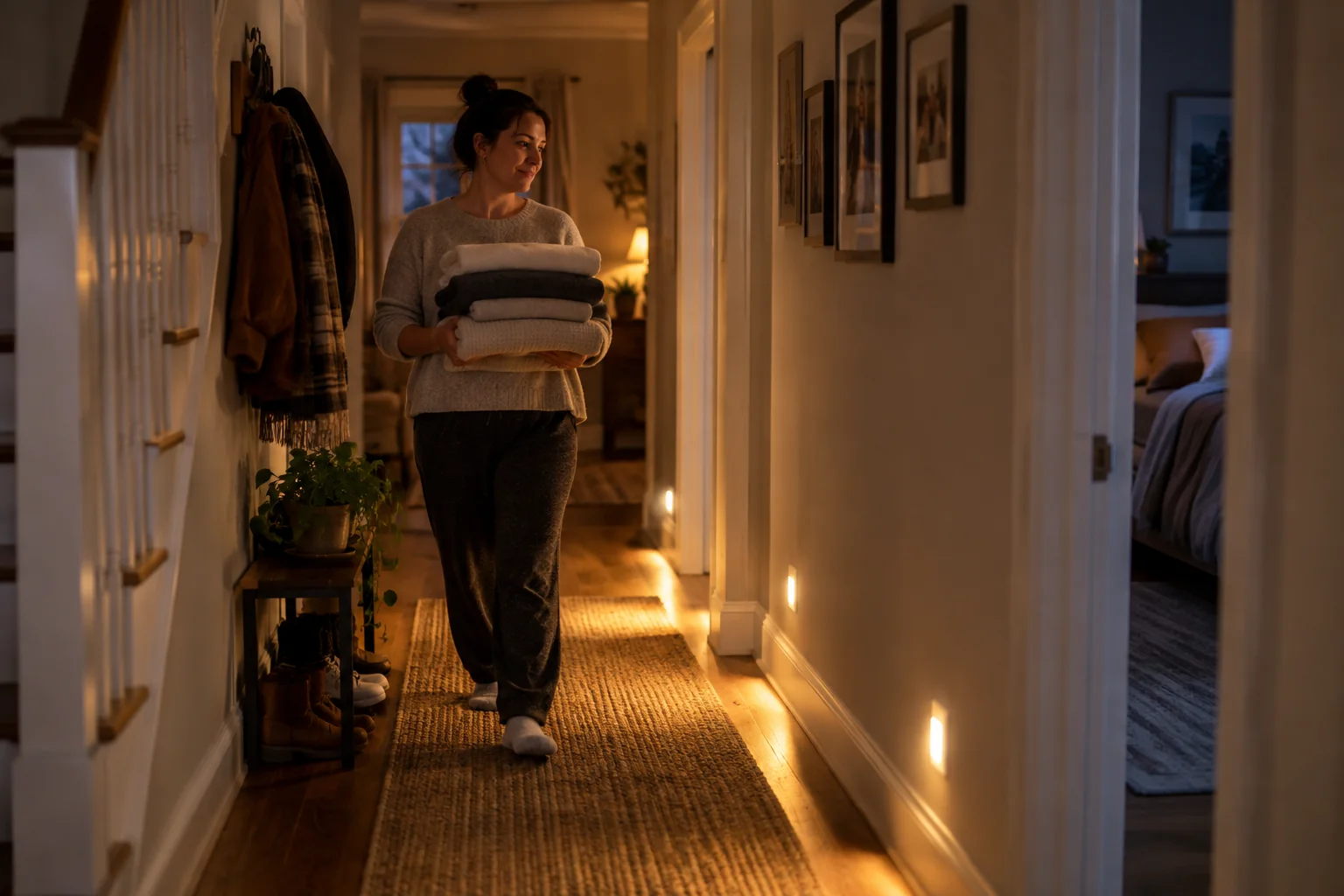
Motion lighting works best in transition spaces with predictable travel. Hallways, stairs, closets and utility rooms offer clear entry and exit events; living rooms and bedrooms require more nuance because people remain still.
The design questions are physical: what the sensor can see, where the light lands and how long a slow person needs to pass. Automation should adapt to time of day and preserve the ordinary switch.
Best for
Hallways, stairs and closets used with full hands or during the night.
Skip it if
The sensor cannot distinguish the path from adjacent rooms, pets or outdoor movement.
Place the sensor for crossing motion
Many sensors detect movement more reliably across their field than directly toward them. Mount at a position that sees the whole approach without watching through an open doorway into a busy room. Test at adult, child and pet height.
On stairs, avoid shadows that hide tread edges. A low wall light or reflected lamp can preserve night vision better than a bright ceiling source aimed into the eyes.
Create separate day and night behavior
During the day, motion may turn on a brighter general scene only when ambient light is low. At night, use the minimum warm light that clearly reveals the route. Begin conservatively and ask household members whether the transition feels abrupt.
A timeout should outlast a careful trip, including pausing at a closet or stair landing. If the light turns off behind someone, extend the timer before adding more sensors.
Keep the switch understandable
The ordinary control must still turn the light on. If a person deliberately changes the scene, suspend automatic dimming long enough for cleaning, moving furniture or caring for someone.
Document the automation in plain language. “Hall light: low after 10 p.m., off two minutes after no motion” is easier to maintain than a chain of unnamed conditions.
Before you spend
- Map the complete path of travel
- Test sensor sightlines with doors open
- Create a separate low night scene
- Time the slowest household member
- Preserve manual full-bright control