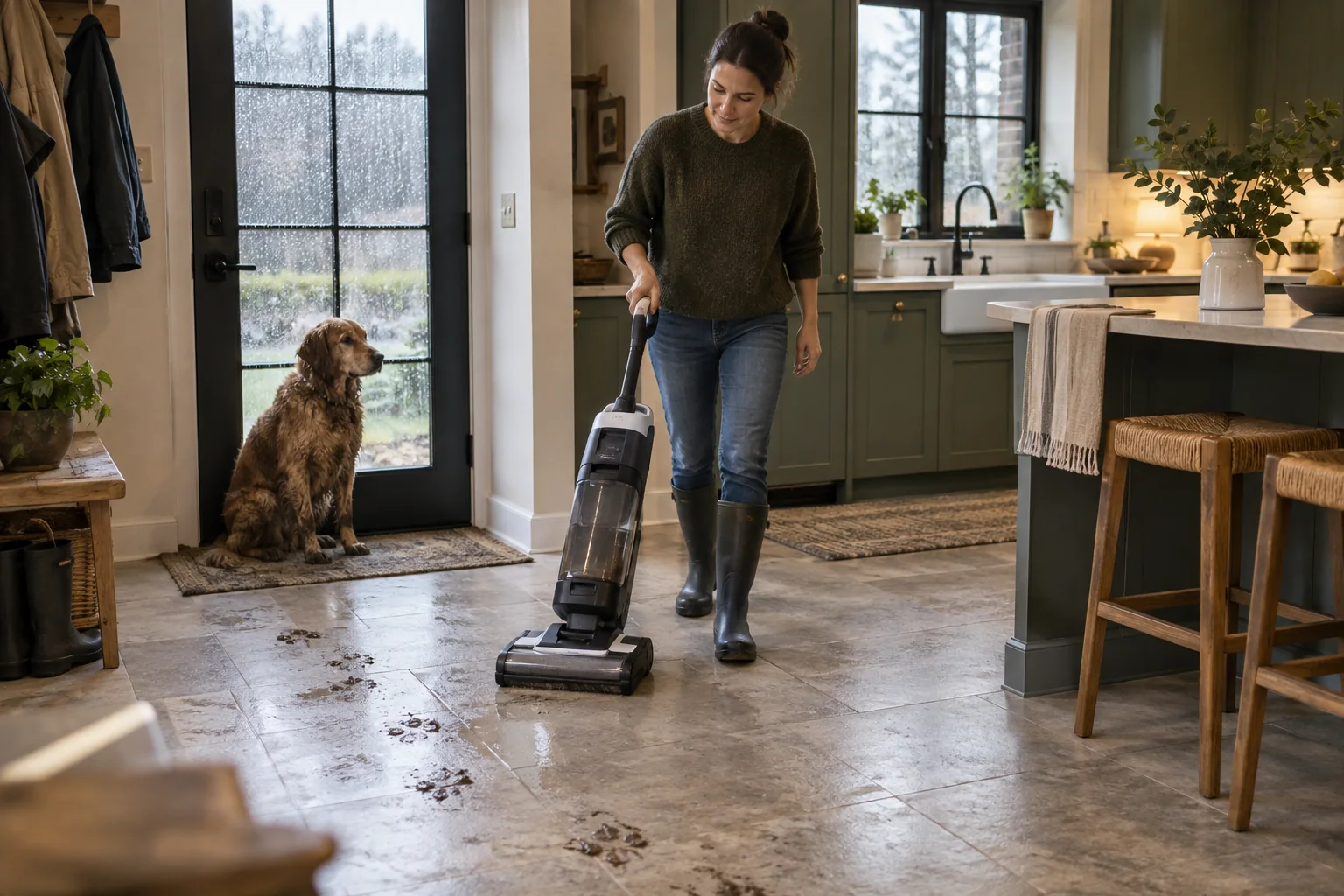
Wet-dry floor cleaners can collapse sweeping and mopping into one pass on supported hard floors. Their value depends on the mess, floor material and willingness to clean the machine immediately afterward.
They are not ordinary vacuums and are not appropriate for every rug, wood finish or spill. Read floor and appliance guidance, and never collect hazardous material.
Best for
Busy kitchens, pet entrances and large areas of compatible sealed hard flooring.
Skip it if
Most of the home is carpeted or the post-clean maintenance will regularly be postponed.
Confirm the floor and mess
Check the flooring manufacturer guidance for water and cleaning solution. Seams, unfinished wood and damaged finishes can react poorly even when a machine is marketed broadly.
Think about the common spill. Food crumbs and muddy footprints suit the format better than large sharp debris, construction dust or substances the manual prohibits.
Inspect edges and furniture access
A bulky head may leave a strip along cabinets or fail beneath low furniture. Measure those areas and accept that a small detail tool may still be needed.
Weight matters most with full tanks and during turns. Try lifting the machine over a threshold and returning it to the dock.
Budget ten minutes after use
Empty dirty water promptly, rinse the supported parts and allow rollers and filters to dry fully. Self-clean cycles reduce contact but do not eliminate inspection and drying.
Store the machine where the dock, tanks and spare roller are accessible. A cleaner hidden behind boxes will not feel convenient after dinner.
Before you spend
- Verify flooring compatibility
- Name the common mess
- Measure edges and low furniture
- Lift it with tanks installed
- Plan immediate tank and roller care