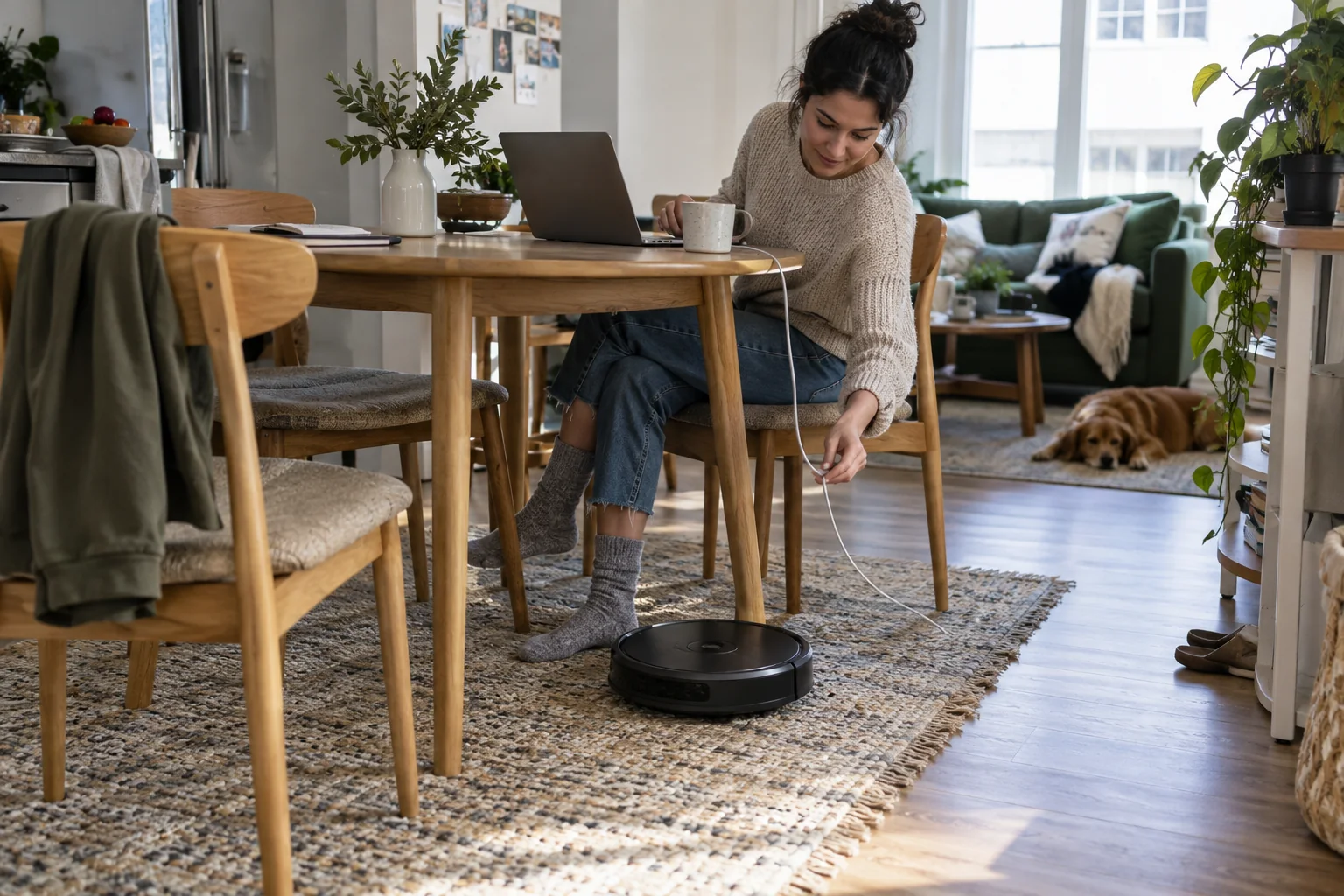
Small apartments are excellent candidates for routine robotic cleaning because the floor area is manageable and daily dust is visible quickly. They are also unforgiving: one cable, high threshold or crowded chair cluster can stop the run.
Map the apartment with a tape measure. Record the lowest furniture clearance, narrowest passage, threshold heights, rug edges and the dock footprint with its required approach space. Those numbers should filter the shortlist before features do.
Best for
Open one-bedroom and studio layouts with regular light cleaning needs.
Skip it if
Most floor space is covered by deep rugs, clutter or thresholds the robot cannot cross.
Measure the route and the parking spot
The robot has to leave its dock, enter each room, turn around furniture and return without moving the dock. A multifunction station may save maintenance but consume valuable floor area. In a small apartment, a simple charger can be the better overall fit.
Check the robot body height against beds, sofas and cabinets. Low clearance is useful only if the space underneath is free of loose fabric, cords and uneven crossbars. Measure rather than assuming a product described as slim will fit.
Match navigation to the room
Simple systematic navigation can be enough for an uncluttered studio. Mapping becomes more valuable when you need room cleaning, no-go zones or a separate mop boundary. Object avoidance helps with unpredictable obstacles but does not remove the need to pick up cables and socks.
Watch the first three complete runs. The robot will reveal pinch points that are easy to solve with a cable clip, shifted chair or raised curtain. Permanent small changes are more effective than rescuing the robot every day.
Decide how much maintenance you are outsourcing
A basic robot asks you to empty the bin, wash pads and fill water more often. A service dock can empty debris and manage mopping, but it adds bags, tanks, cleaning and a larger visual footprint. Compare weekly work, not just automation features.
If you mop, inspect rugs and floor transitions carefully. Some basic combo robots require physical preparation or separate bins. A robot that matches your floor mix is more useful than one with a long feature list you cannot safely enable.
Before you spend
- Measure body and dock clearance
- Inspect thresholds and rug edges
- Create a cable routine
- Compare weekly maintenance
- Observe three full runs before scheduling