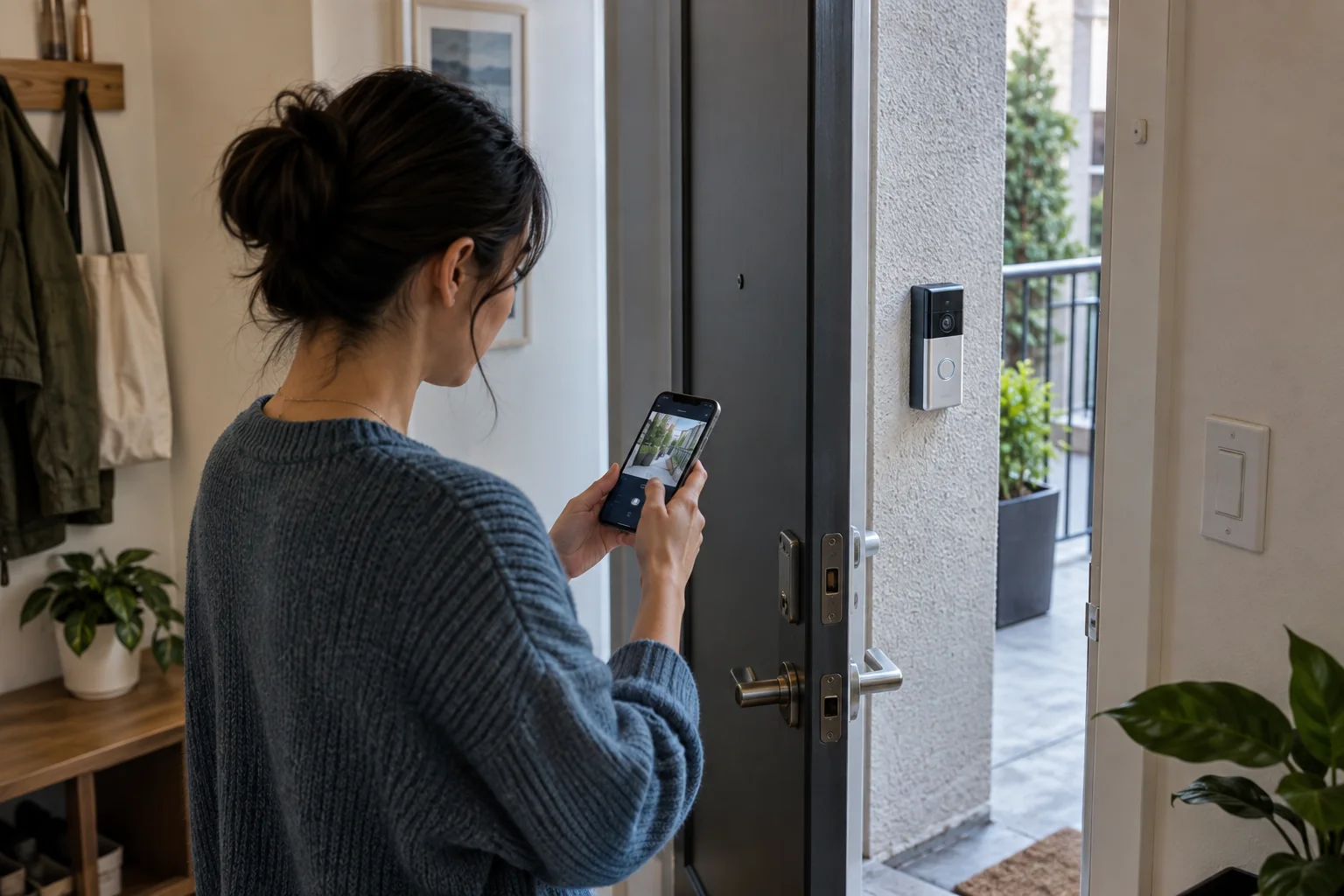
Leak sensing is simple only on the product page. In a real home, the sensor must touch water early, stay connected behind cabinets and send an alert that someone can act on. Placement and response planning matter as much as the sensor.
Begin with the highest-consequence locations: water heaters, washing machines, dishwashers, sinks, refrigerators with water lines and any plumbing above finished space. A sensor is a warning device, not a substitute for maintenance or an accessible shutoff.
Best for
Homes with hidden supply lines, finished rooms below plumbing or periods when nobody is home.
Skip it if
You cannot place, test and maintain the sensor where water would actually collect.
Map likely water paths
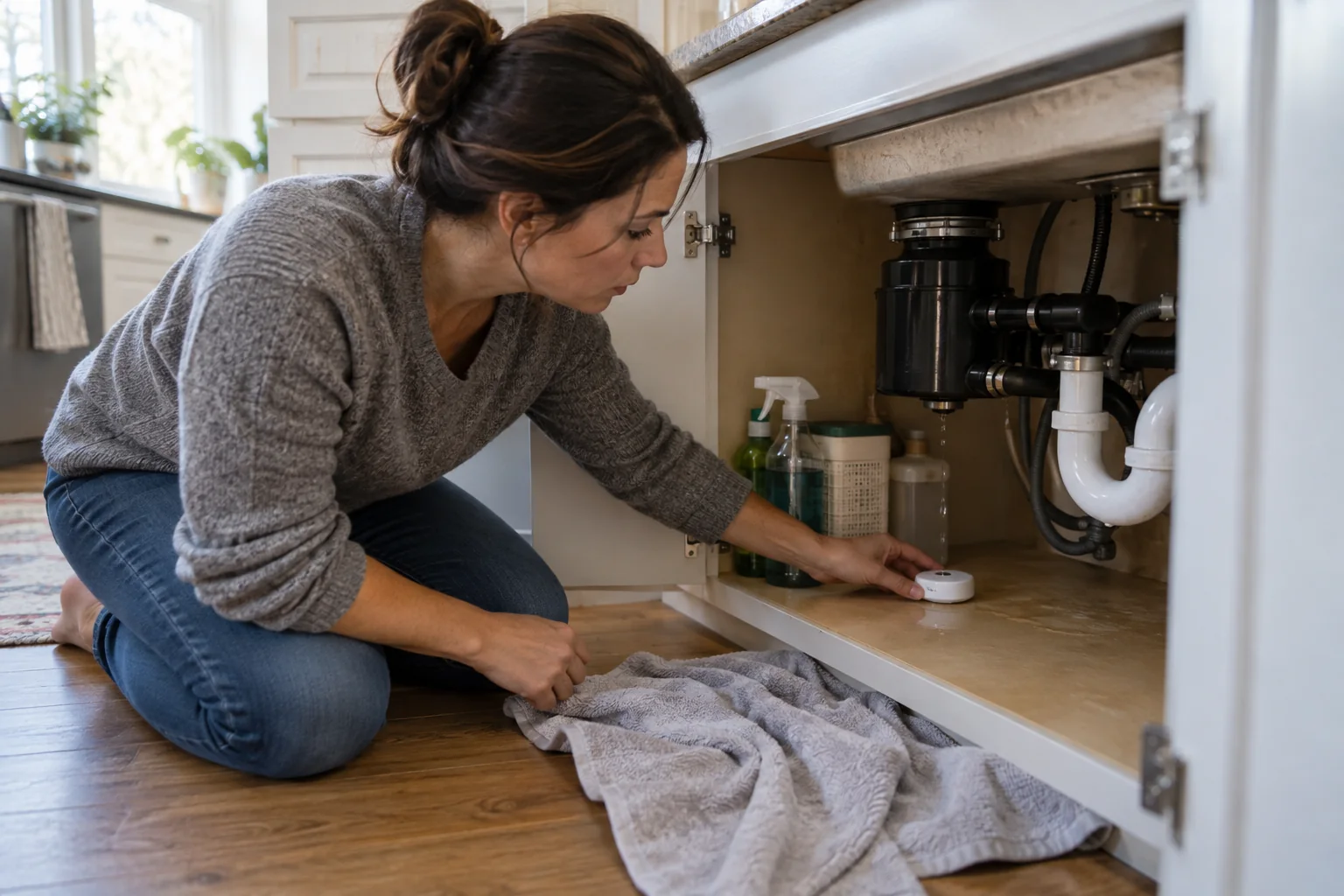
Look for the lowest point inside each cabinet and the route a drip would take around pipes, trays and flooring seams. Place the sensing contacts flat where the first small amount of water is likely to reach them, not where the device looks tidy.
A washing machine deserves attention at both supply connections and the drain path. At a water heater, keep the device away from normal condensation while still covering the drain pan or floor area that would reveal a leak.
Make the alert specific and redundant
Name each device by room and source—“upstairs bath vanity,” not “sensor three.” Send alerts to more than one responsible adult and decide who can reach the property. A neighbor with no shutoff instructions is not a response plan.
Test the audible alarm, phone notification and hub connection separately. Cabinets, appliances and concrete rooms can weaken a wireless signal, so confirm the installed position rather than testing on the kitchen table.
Practice the first five minutes
Every adult should know the main water shutoff location and whether a tool is required. Photograph the valve, keep the route clear and avoid automating a whole-house valve unless the plumbing, insurance implications and failure behavior are understood.
Inspect hoses and fittings on a schedule. A working sensor can reduce discovery time, but replacing a worn supply line is better than receiving a faster alert when it fails.
Before you spend
- List every water-using appliance
- Place contacts at the first collection point
- Use specific room-and-source names
- Test notifications away from home
- Document and practice the shutoff route