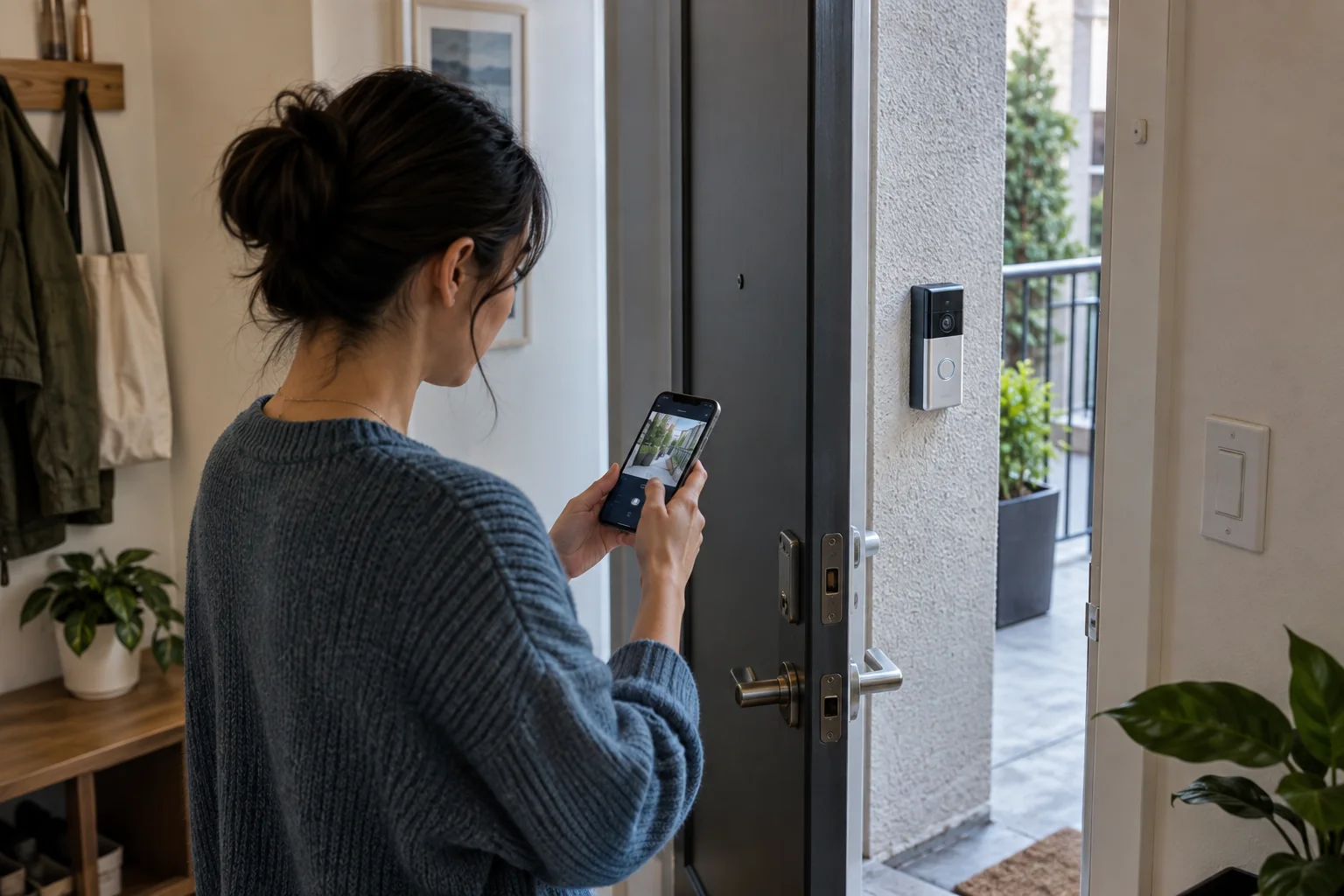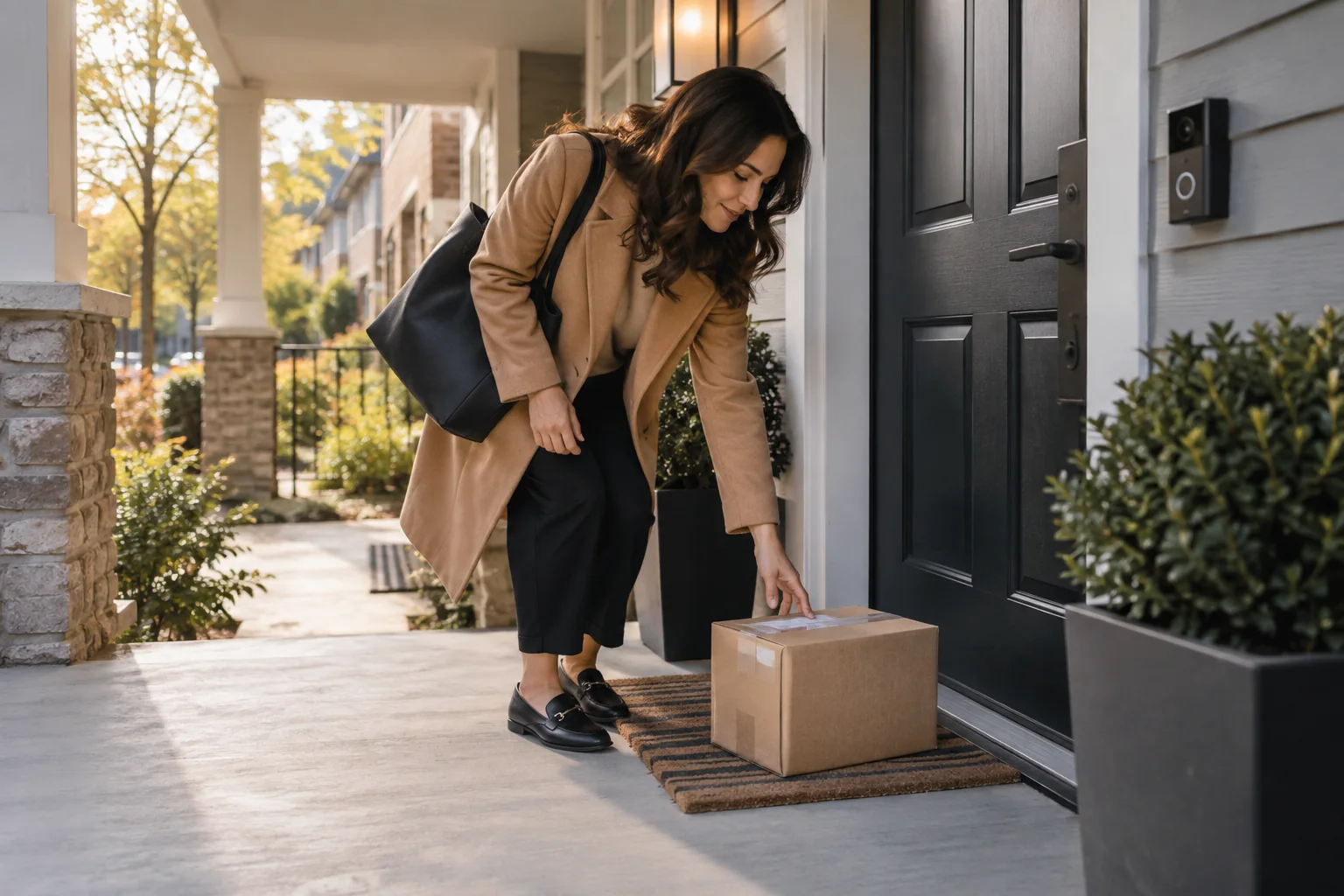
Delivery security improves when the household agrees on where parcels go, who responds and how long an alert can wait. A doorbell view helps confirm arrival, but it cannot move the box or guarantee carrier behavior.
Start with delivery preferences and a protected, visible location. Add technology to shorten uncertainty rather than to promise prevention.
Best for
Households with frequent deliveries, changing schedules or a porch exposed to weather and foot traffic.
Skip it if
The plan depends on drivers entering locked or private areas without an approved access method.
Make the safe choice obvious
Choose a drop area that is dry, stable and not a trip hazard. Concise delivery instructions should describe the location without revealing alarm details, schedules or sensitive access information.
A parcel box can help in the right setting, but measure typical packages and confirm that carriers can use it without blocking a walkway. Building and landlord rules still apply.
Send the alert to an owner
Route package or door alerts to the person responsible during that time block. A shared family thread can make the handoff visible when work or school schedules change.
Avoid alerting everyone to every motion. Test whether detection reliably distinguishes the delivery area, then use a backup tracking notification for important orders.
Handle access cautiously
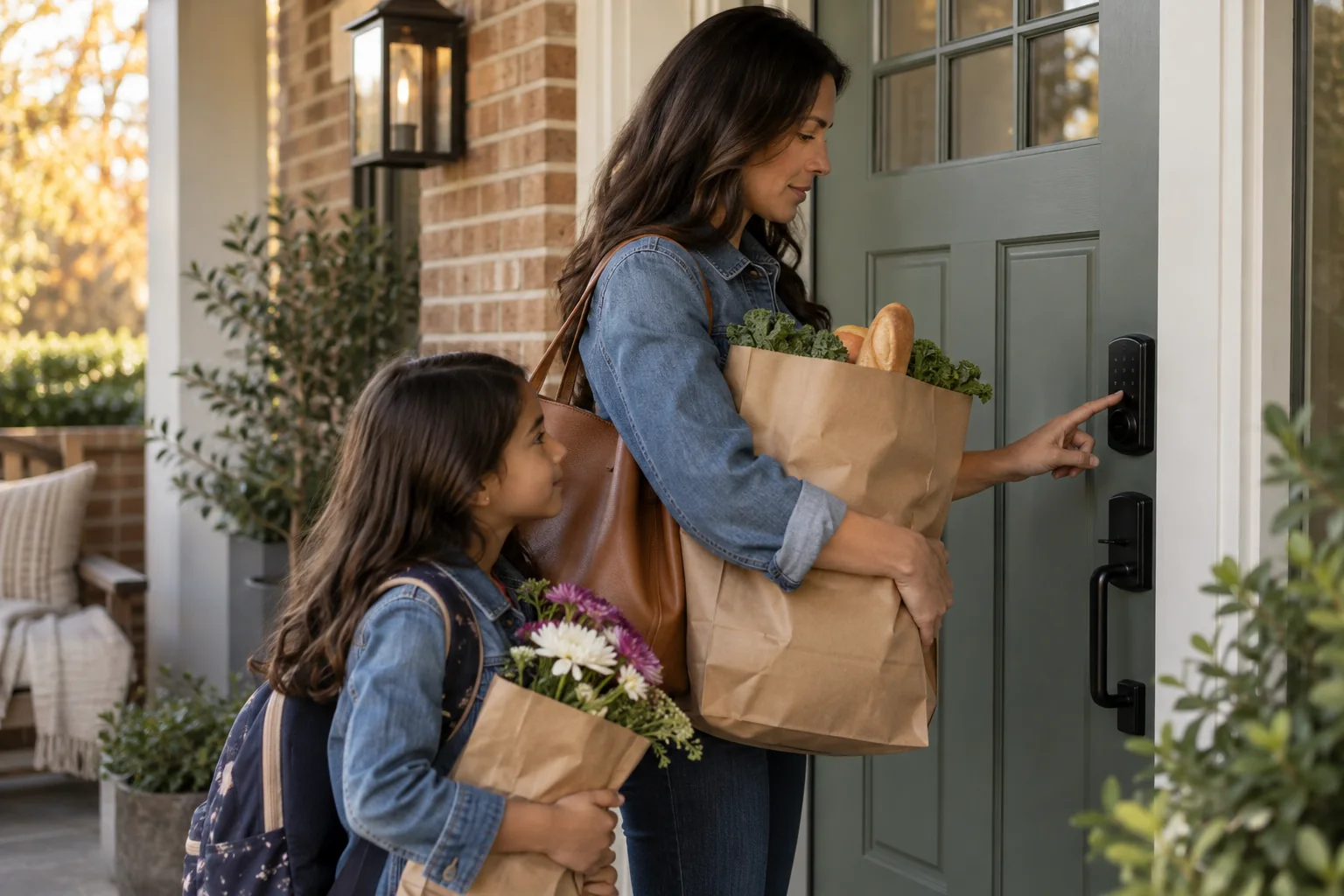
Remote unlocking should be rare, intentional and observable. Use a unique code where supported, limit its duration and never send permanent household credentials in delivery notes.
Review saved users and codes regularly. If unattended access is not truly necessary, a protected exterior drop point is simpler and creates less risk.
Before you spend
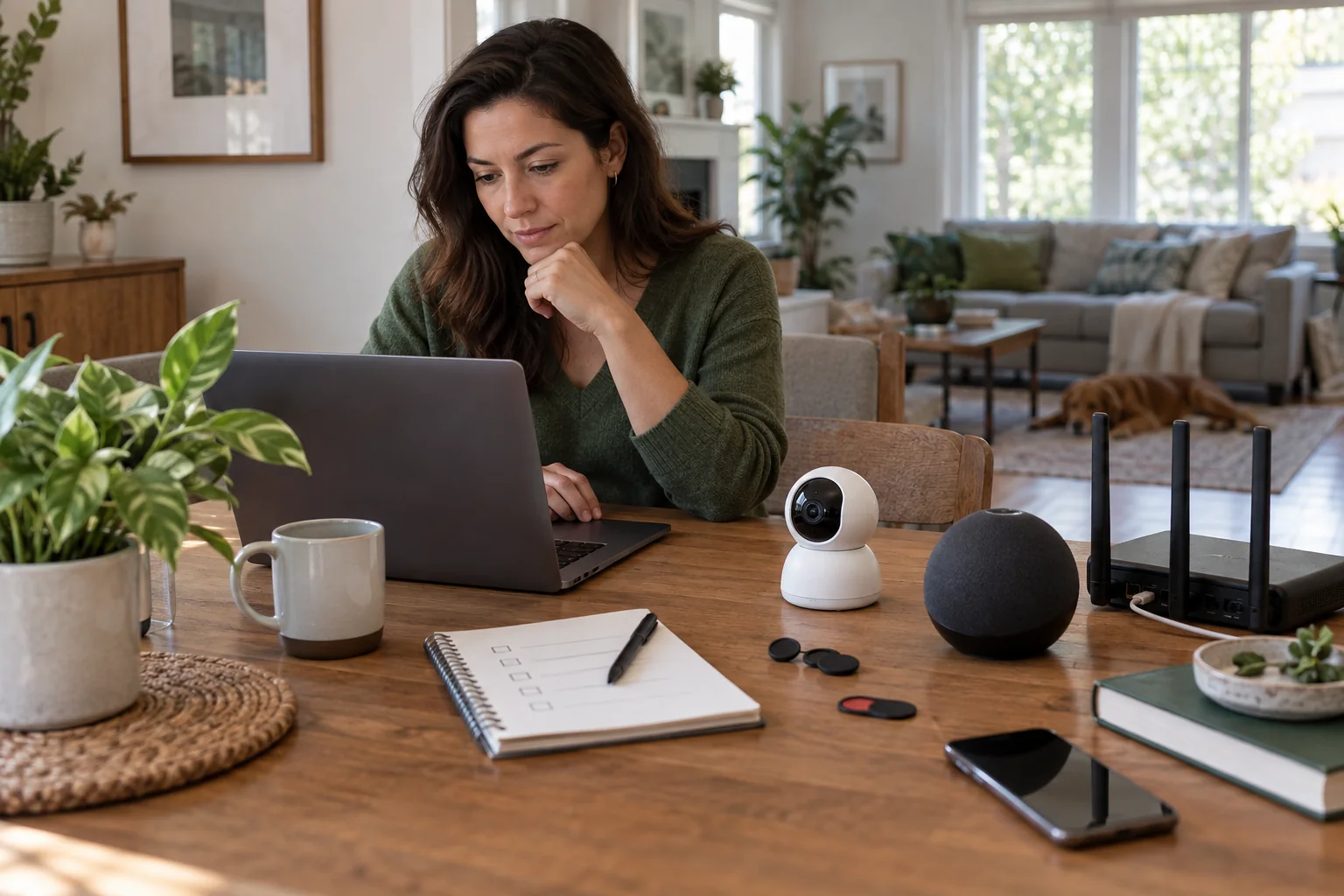
- Choose one protected drop point
- Write concise carrier instructions
- Assign the retrieval owner
- Test package alerts
- Use temporary access only when necessary