Camera placement is a coverage decision, a maintenance decision and a privacy decision. The useful frame shows the route people actually take and provides enough context to understand an event.
Review local rules, building policy and expectations around audio recording. Avoid bedrooms, neighboring private areas and broad surveillance that is unrelated to protecting the home.
Best for
Homes that need understandable door, gate or driveway context without continuous neighborhood monitoring.
Skip it if
The only available angle captures a neighbor’s private space or cannot be installed and powered safely.
Design the frame from the path
Stand where a visitor, delivery driver and household member first appear. The camera should capture that approach before the person reaches the door, not only the moment directly below the lens.
Include a small amount of fixed context such as a gate or step. Too much public sidewalk or sky reduces the useful area and can increase irrelevant motion.
Plan power and maintenance
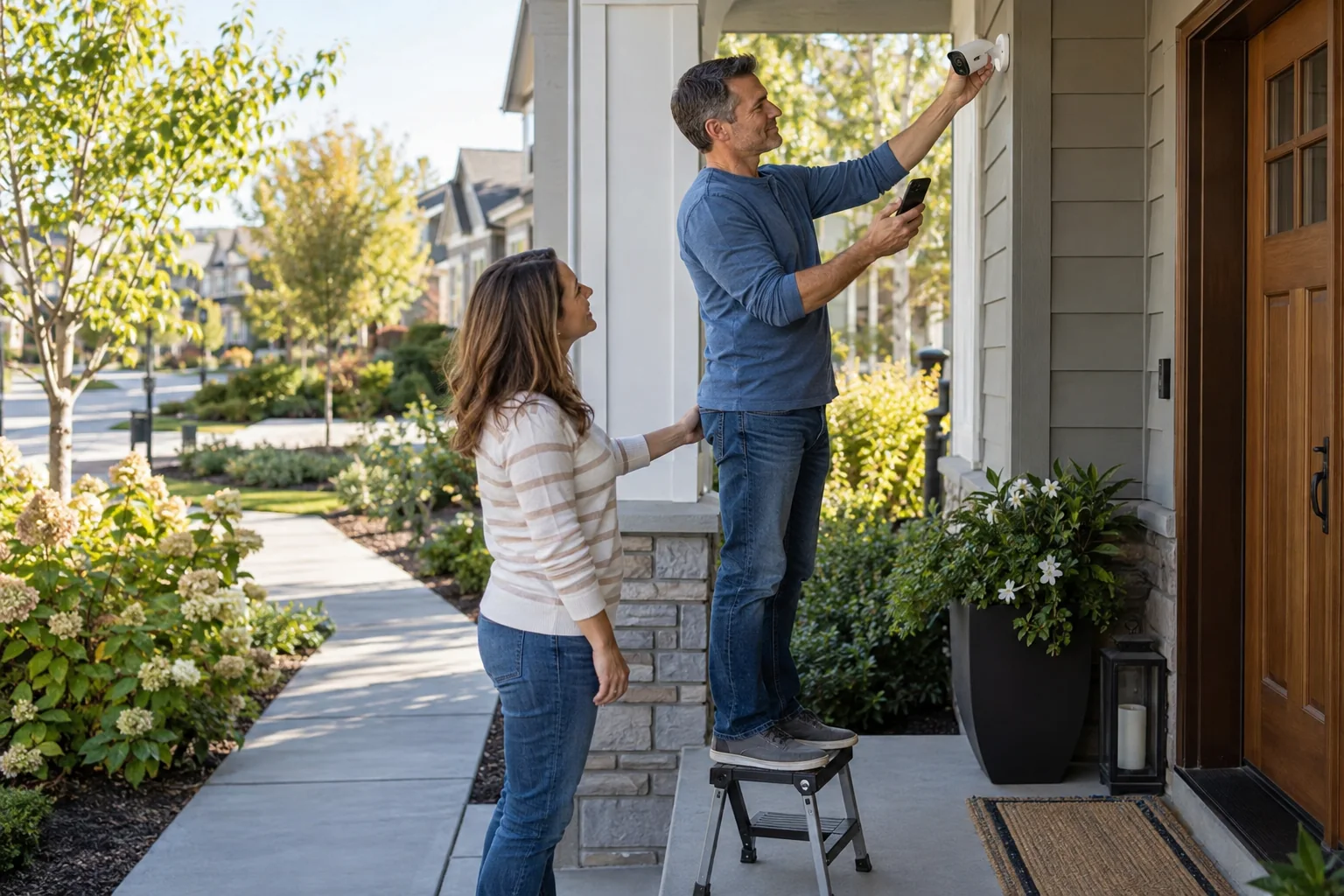
A battery camera still needs safe access for charging, cleaning and resets. A wired camera needs a weather-appropriate installation that follows the product and building requirements.
Check seasonal sun angle, foliage and precipitation. A location that works in winter can face glare or leaves in summer, so review sample clips across the day.
Tune for household reality
Draw activity zones around the property entrance and remove busy roads, moving branches and shared spaces where possible. Begin with fewer alert types, then add only signals someone will act on.
Give household members a clear retention and access policy. Strong passwords, multi-factor authentication and prompt removal of old users matter as much as the mount.
Before you spend
- Walk every normal approach
- Exclude private neighboring areas
- Confirm safe service access
- Review day and night clips
- Tune zones and user access