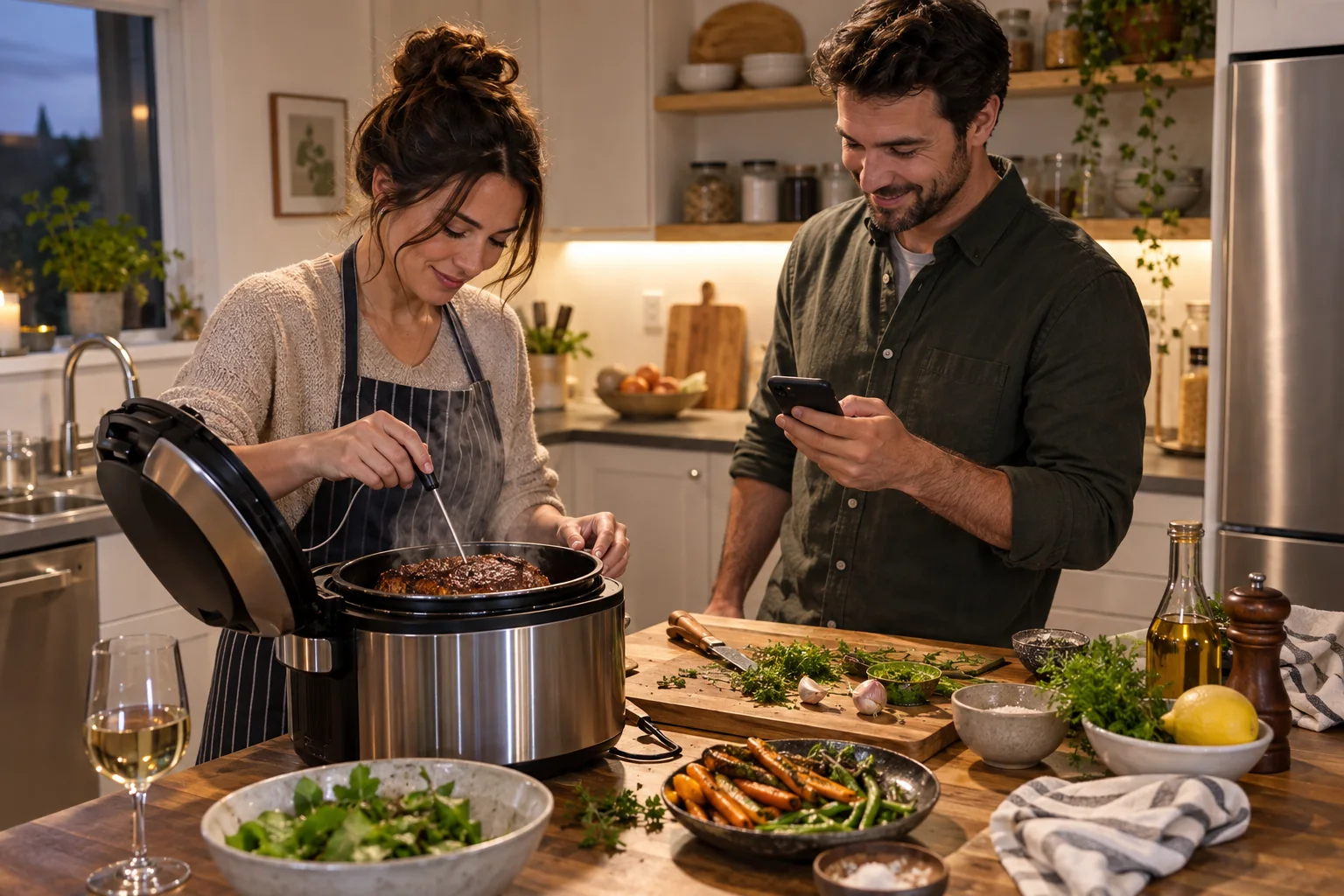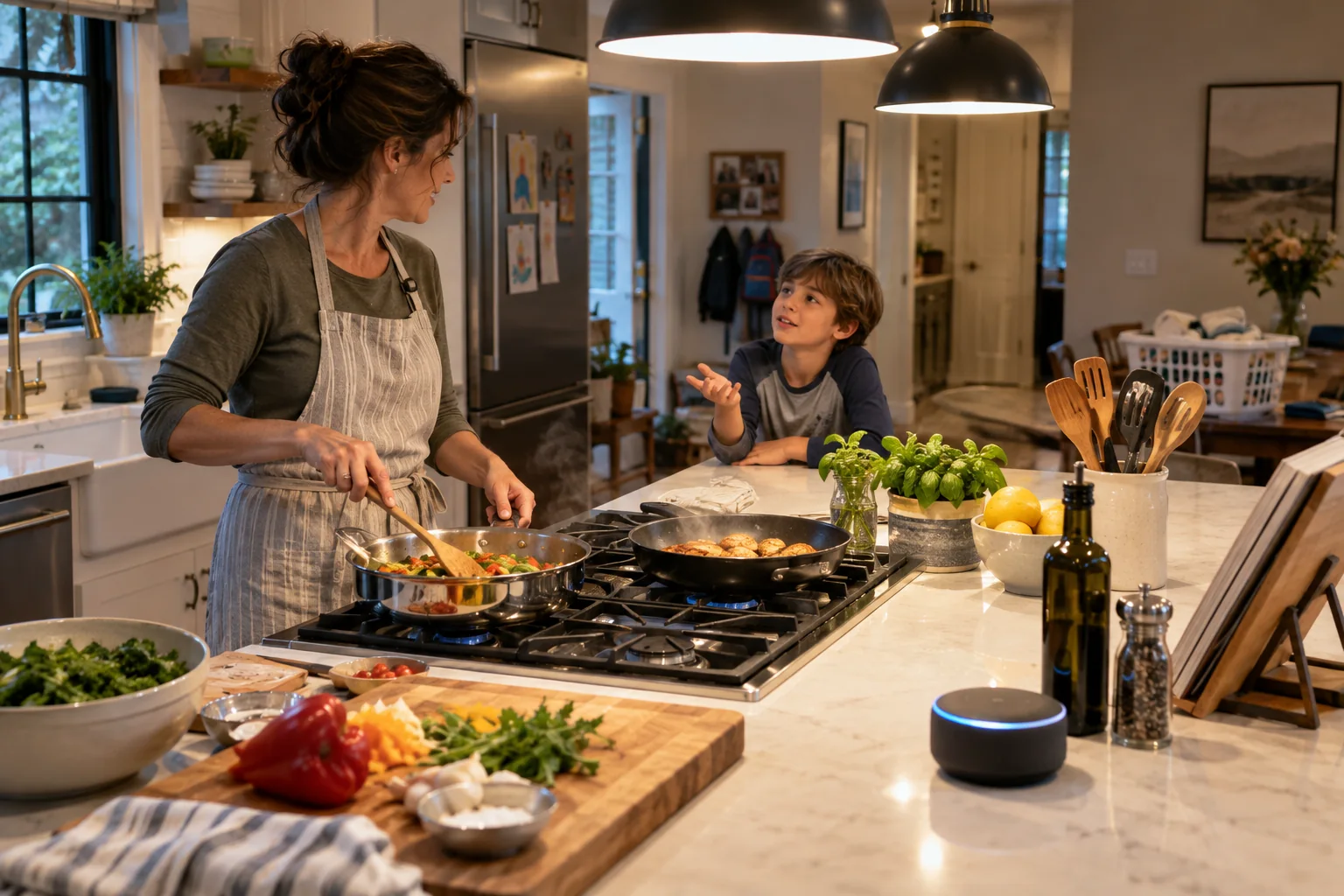
The safest kitchen automations support attention. They make timers audible, illuminate work surfaces, remind someone to check an oven and keep ordinary controls obvious.
They should not create remote-start shortcuts for appliances, defeat built-in safety features or encourage unattended cooking. Use the appliance manual and local safety guidance as the boundary.
Best for
Busy households that want clearer timers, task lighting and repeatable shutdown checks.
Skip it if
The idea requires bypassing appliance controls or leaving active cooking unattended.
Use named timers
Say or enter “pasta,” “oven” and “resting” instead of running several anonymous countdowns. A timer is useful only when the alert identifies the action.
Keep a visible timer available when voice recognition may fail. Test alerts over the range hood and normal conversation.
Light the work, not the whole room
Task lighting should reveal cutting surfaces, controls and spills without glare. A cooking scene can raise counter light while leaving dining light comfortable.
Physical switches remain essential for wet hands, guests and quick shutdown. Do not make a phone the only way to illuminate a hot work area.
Create a human shutdown routine
At the end of cooking, scan burners, oven, small appliances, refrigerator doors and the floor. A reminder can prompt the scan, but a sensor cannot see every hazard.
Do not place a general smart plug between an outlet and a high-load appliance unless both products explicitly allow the use. Electrical ratings alone do not establish suitability.
Before you spend
- Name every cooking timer
- Test alerts over kitchen noise
- Keep strong task lighting
- Preserve physical controls
- Perform a human shutdown scan