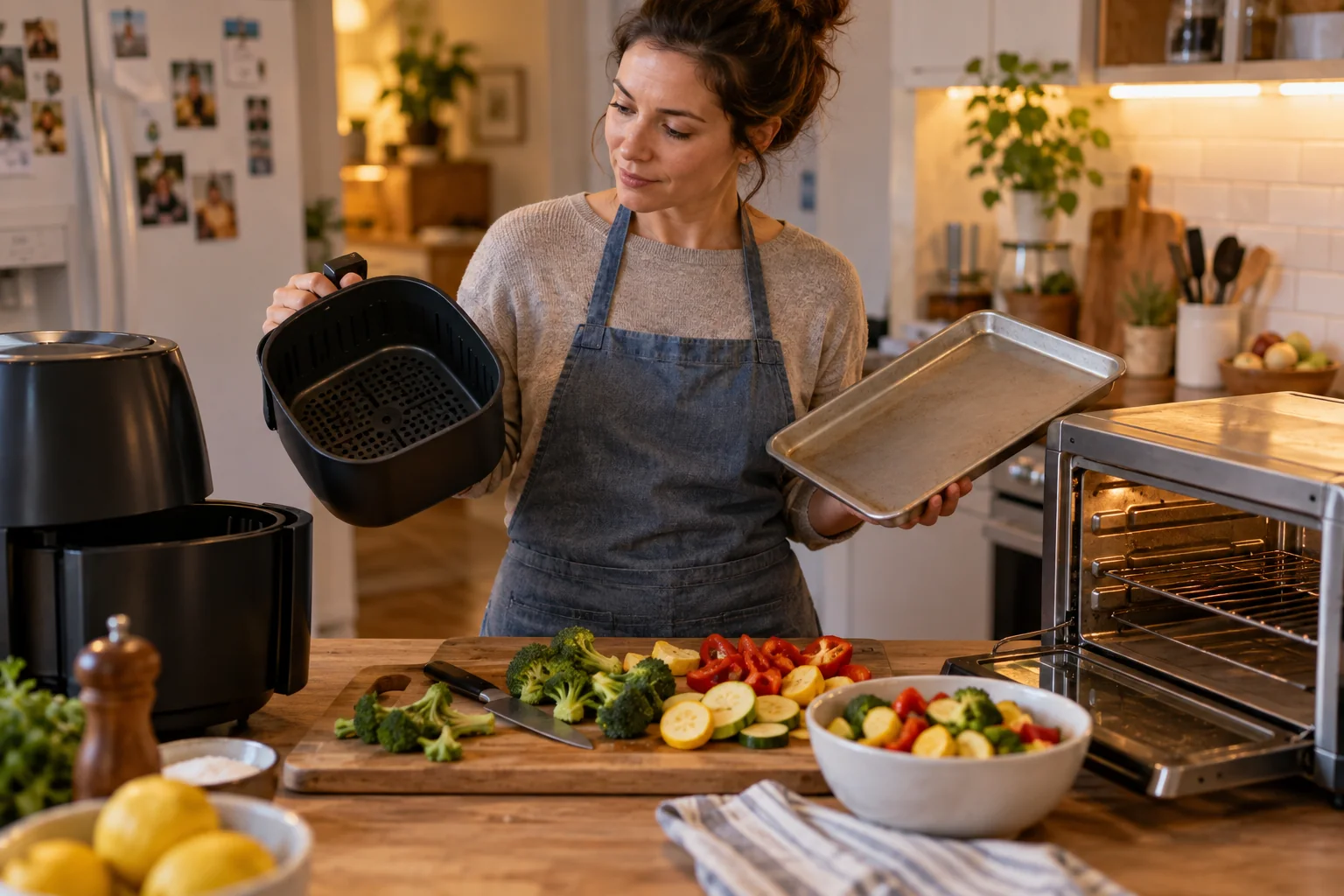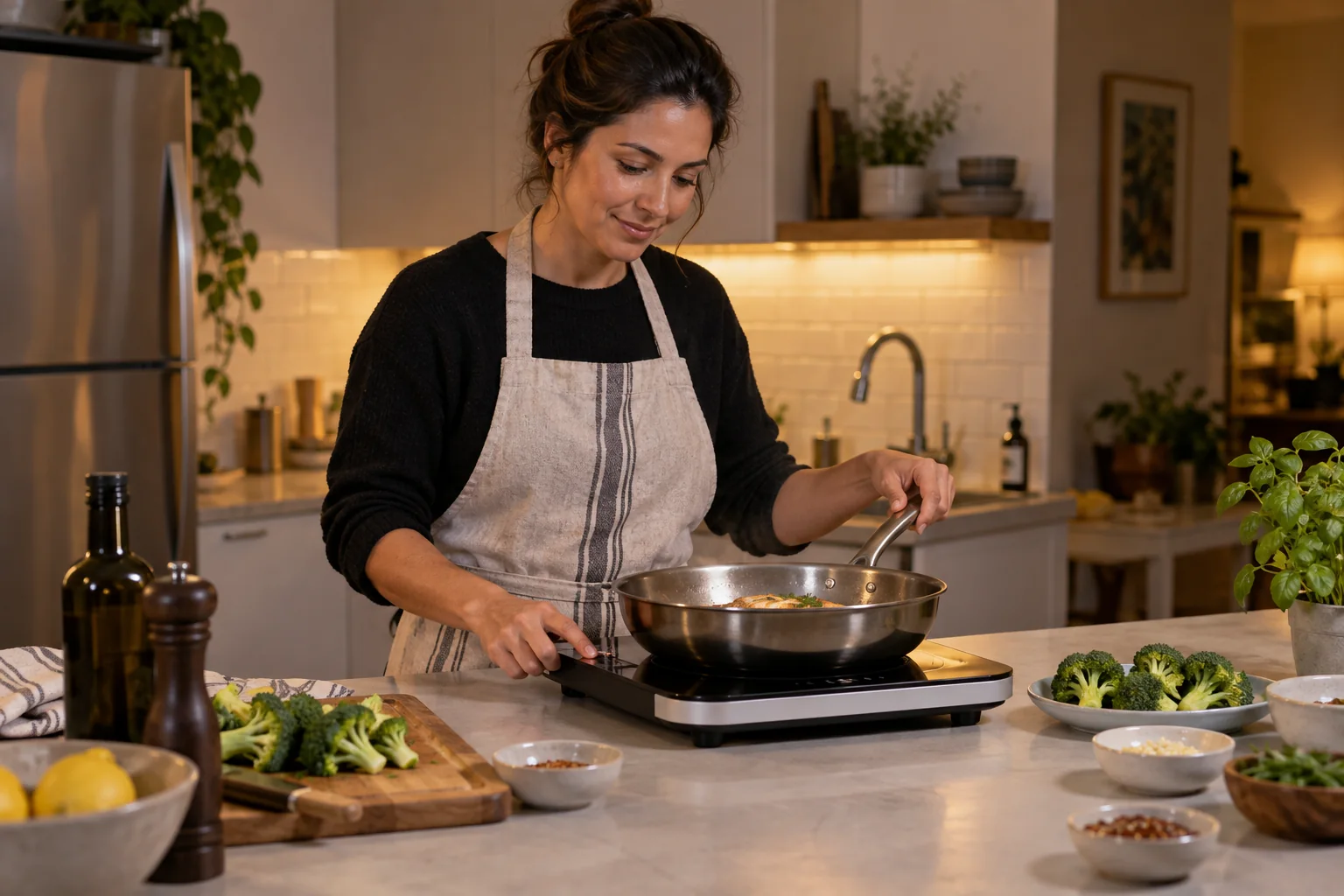
Kitchen technology should improve consistency or reduce supervision without adding unsafe remote behavior. Temperature probes, scales, timers and well-designed countertop appliances often earn their space because they support a repeatable process.
Every connected appliance also competes for counter space, cleaning time and account attention. Measure the storage location and name the weekly meal it will help before buying.
Best for
Weeknight cooks who repeat meals and want fewer timing mistakes.
Skip it if
The appliance has no permanent storage or the app is the only practical way to use it.
Start with the cooking bottleneck
Review the last five dinners that felt stressful. Was the oven inaccurate, the protein overcooked, prep too slow or attention split between rooms? Match the tool to that problem. A temperature probe solves a different issue from a multicooker or inventory camera.
Prefer equipment that remains fully usable from physical controls. Apps are helpful for alerts and saved programs, but dinner should not stop because a phone is updating or the network is unavailable.
Protect counter space and food safety
Trace the appliance footprint, open-lid height and heat clearance on the counter with paper. Confirm the outlet location and keep cords away from water and hot surfaces. If a device must be unpacked from a high cabinet for every use, it needs to save meaningful time.
Remote start deserves caution. Heating appliances should be loaded, positioned and used exactly as the manufacturer directs. A smart plug is not a universal way to make a cooker remote-controlled; ratings, switches and food-safety conditions all matter.
Evaluate the whole cleanup loop
A device that saves ten minutes cooking but creates twenty minutes of hand-washing is not automatic value. Check whether food-contact parts are easy to remove, replace and dry. Look at gasket, probe and filter availability rather than only the appliance body.
Keep a simple “keeper test” for the return period: use the tool for three normal meals, not a special project. If it cannot remain set up, cleaned and ready in your real kitchen, return it before it becomes storage.
Before you spend
- Name the repeated cooking problem
- Measure footprint and lid clearance
- Require physical controls
- Check washable parts and replacements
- Test with three normal meals