Apartment security begins with the hardware and access process already present: a door that latches, controlled keys, working intercoms and prompt reporting of common-area problems.
Any camera, lock or sensor must fit the lease, building policy and local privacy rules. Shared corridors deserve a narrower, more deliberate approach than a detached front yard.
Best for
Renters who want better arrival awareness and access control within a managed building.
Skip it if
The device conflicts with the lease, fire code, door hardware, building system or shared-hallway privacy expectations.
Audit the ordinary door
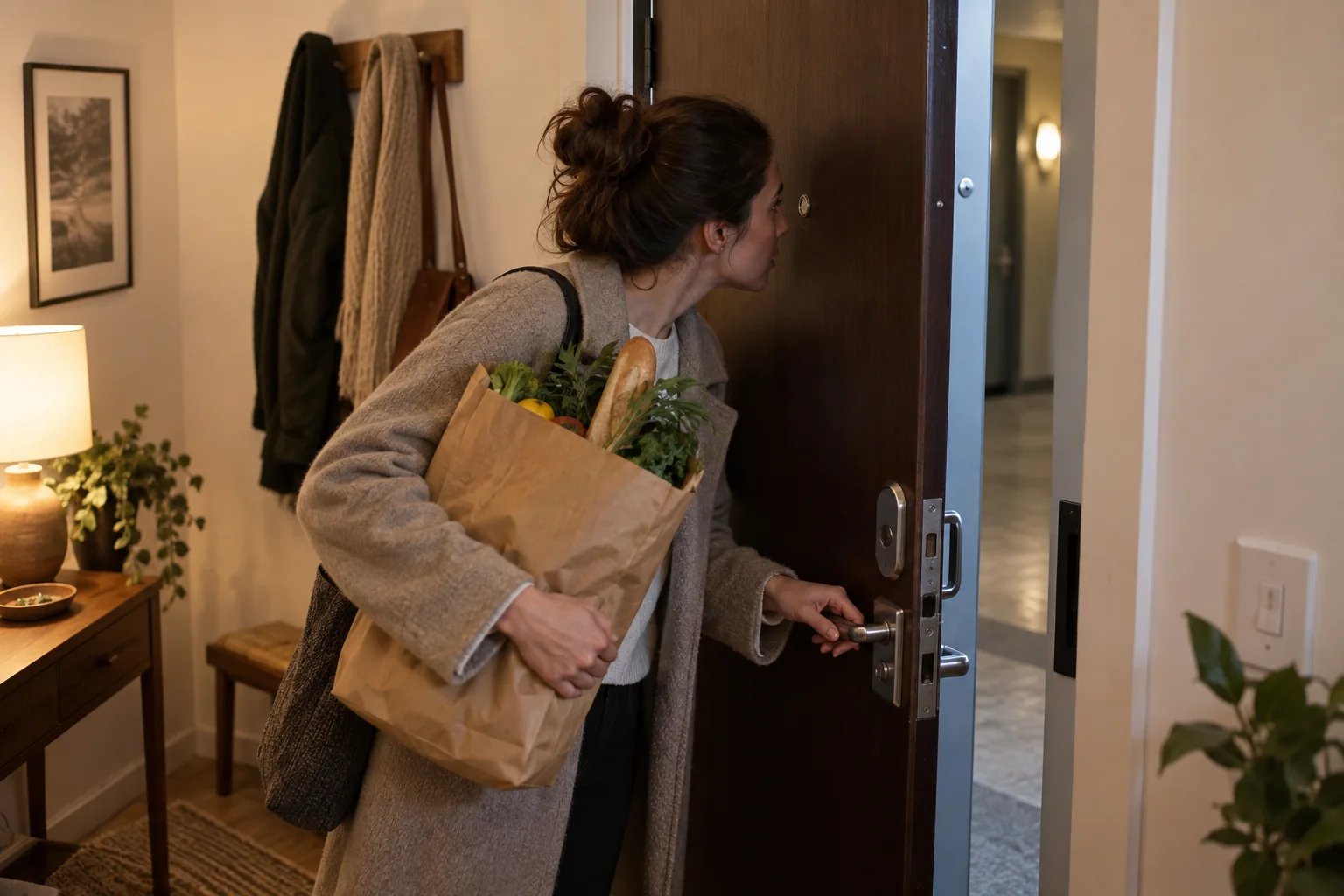
Confirm the door closes and latches without being pulled, the strike is secure, the viewer is clear and household keys are accounted for. Report building defects instead of modifying rated or common hardware yourself.
Keep the entry route lit and free of packages, shoes and cords. A clear threshold improves both everyday use and emergency exit.
Choose the least intrusive signal
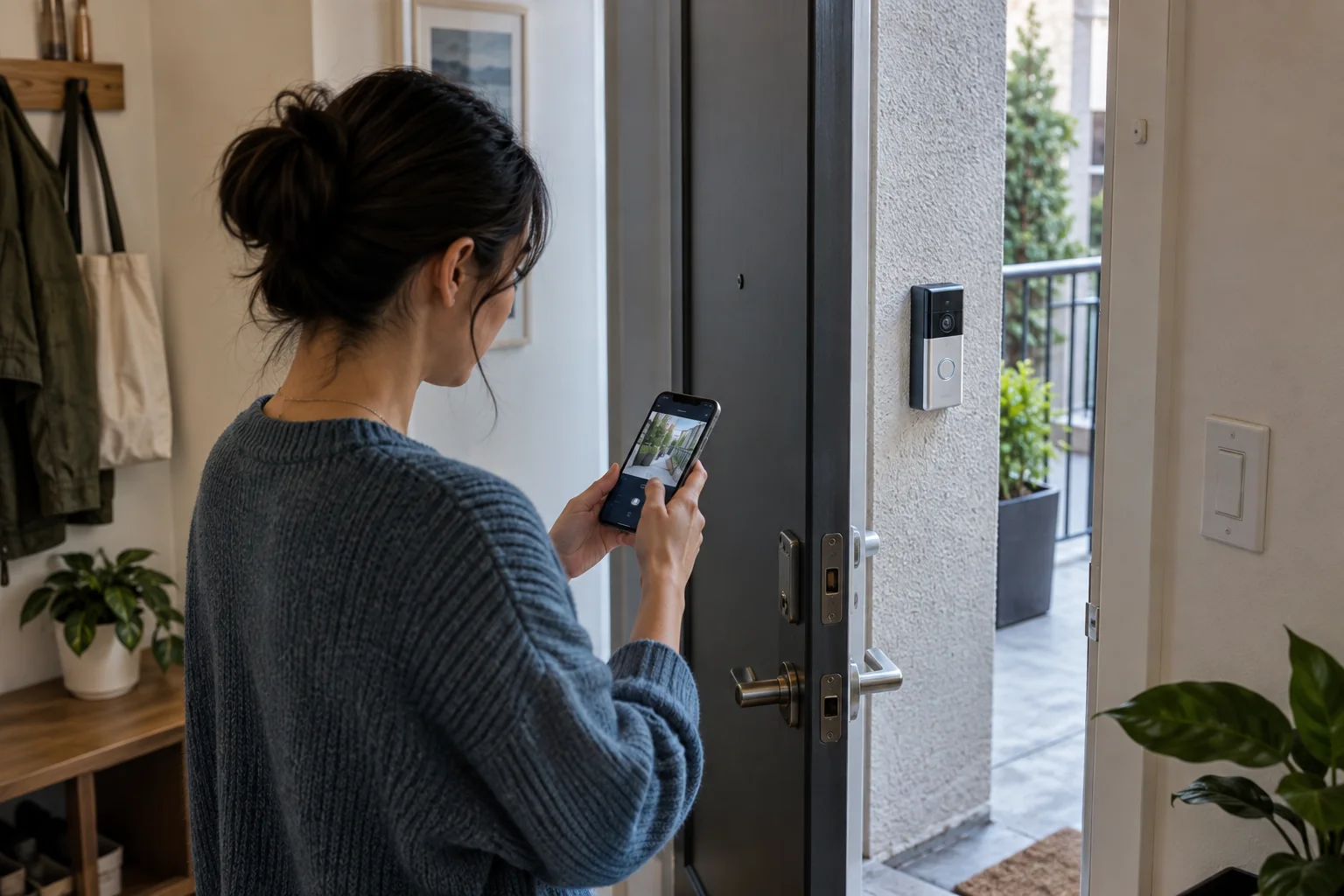
A removable contact sensor can report when the door opens without filming the hallway. A permitted peephole or doorbell device may add context, but its frame should be limited to the area immediately relevant to the unit.
Disable unnecessary audio and long retention where appropriate. Notify household members and follow building requirements before recording any shared area.
Manage people, not just products
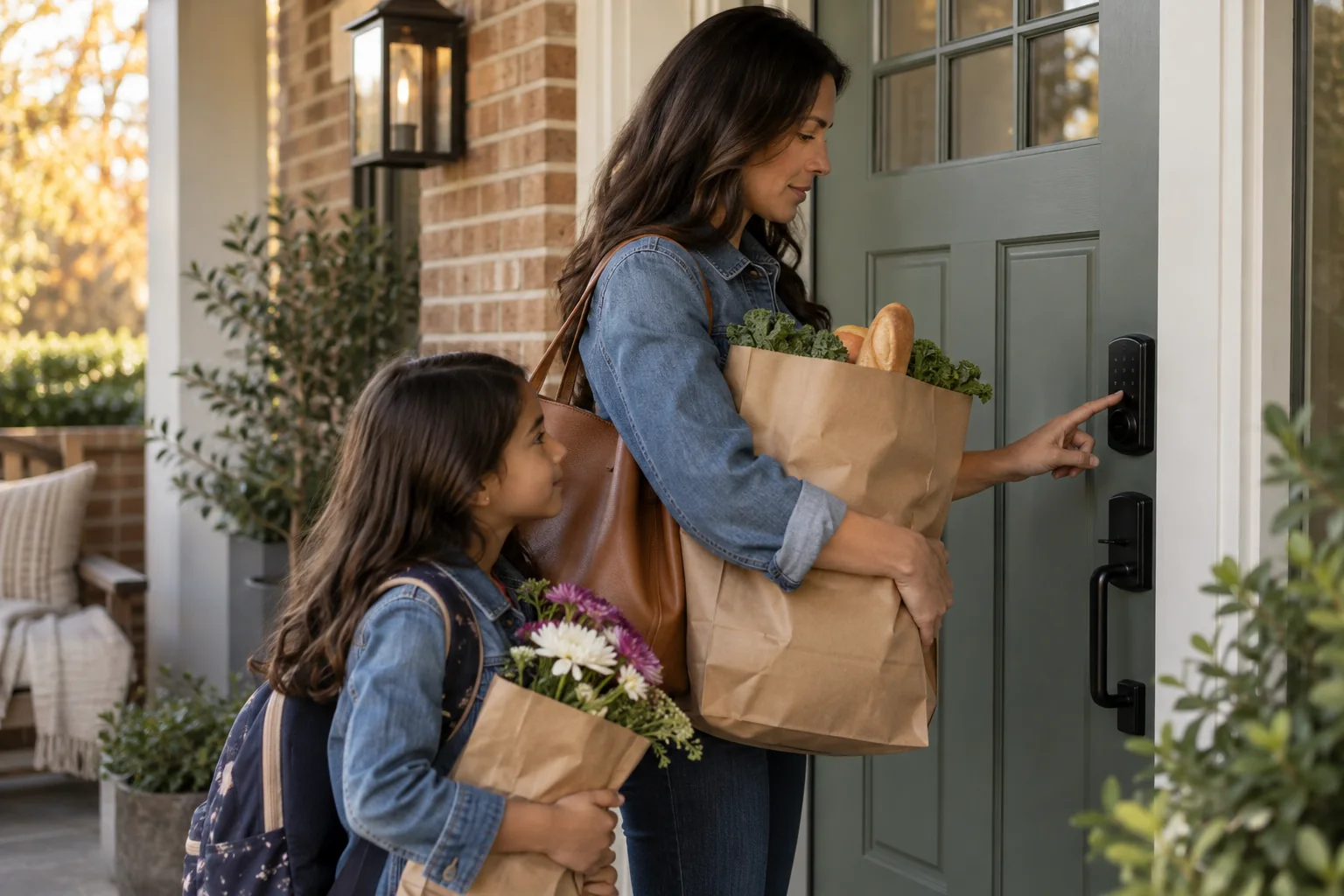
Create separate lock codes when approved and supported, remove former residents promptly and never prop open a controlled building entrance for an unknown visitor.
Agree on how to handle unexpected buzzes and deliveries. A good rule is easy to follow when someone is tired, carrying groceries or speaking through a poor intercom connection.
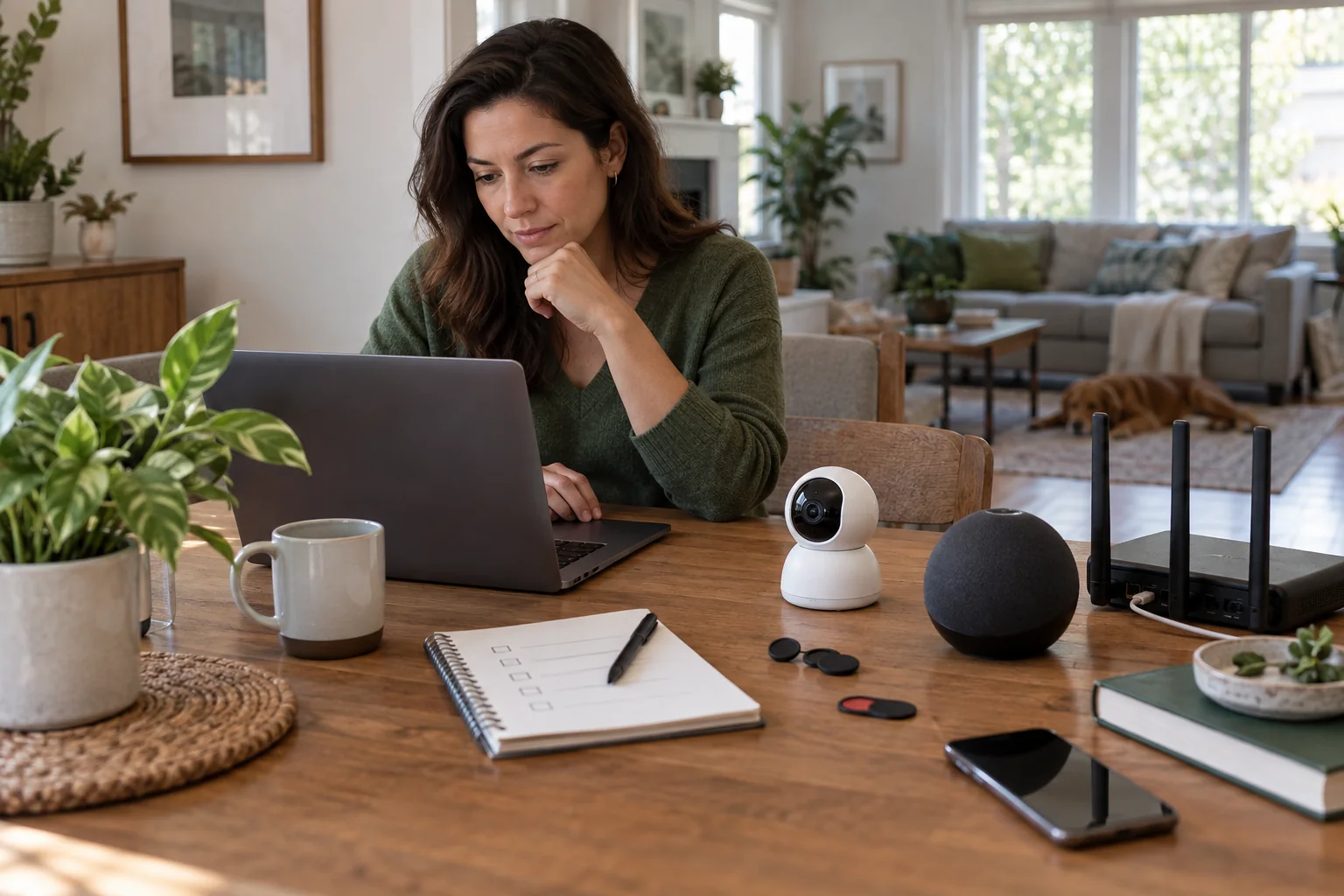
Before you spend
- Check latch and key control
- Read lease and building rules
- Prefer non-camera awareness
- Limit any shared-area view
- Remove old users and codes